As the United States celebrates its 250th anniversary, we asked University of Maryland College of Education faculty, staff, students and alums: How do you stay civically active and engaged in your community and beyond?
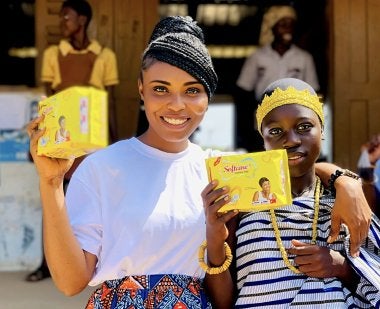
As founder and CEO of the nonprofit Araba Foundation International, I work with underserved communities in Ghana to expand educational opportunities for children, mentor young people, support girls with menstrual health resources and create spaces where young Africans can access mentorship and opportunities. Beyond the community level, I engage in conversations on education, gender equality and development through academic research and in global policy spaces. I have experienced firsthand how access and opportunity can transform a life, and I believe in helping create that possibility for others.
Joyce Arthur M.A. ’26, Ph.D. student in international education policy
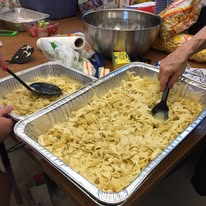
I prepare healthy meals for women at a Montgomery County interfaith shelter through my synagogue’s social action committee, in partnership with other faith communities.
What began as an opportunity to shop, cook, deliver and serve meals with my daughter also became an important teachable moment — reinforcing the importance of gratitude and giving back to others. Over nearly 20 years, this has remained a meaningful way for me to contribute to my community.
Barbara Friedlander ’85, M.A. ’90
One way I stay engaged is to serve as an election judge. As state employees, we are able to take leave to serve in this role. It allows me to connect with my community and support a fair election process and the vital right to vote.
Rachel M. Hess ’07, assistant director of alumni relations
I think being civically active starts with noticing how many of our daily decisions affect other people. I try to be mindful about how each of my actions influences my neighbors and my communities and ask myself, "Do my actions help create the world I want to live in?"
Elizabeth Reynolds Ph.D. ’26, post-doctoral associate
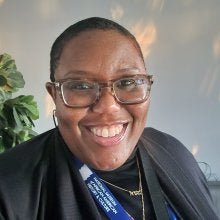
I volunteer as a docent at the National Museum of African American History and Culture. I talk about U.S. history through the lens of the African American experience, and I engage my community in conversations about the trials and triumphs of African Americans and their continued contributions to American society.
This community engagement keeps me grounded in my identity as a Black woman. It also encourages me to always remember that my history is rich with examples of imagination, innovation, perseverance, organization, hope and resilience.
Tyanna A.E. Clayton-Mallett, Ph.D. candidate in student affairs
It’s quite easy to feel powerless today, in the wake of AI and various national policy decisions, but participating in local elections is my way of making my voice heard on community issues. I spent the beginning of my summer canvassing for a local politician whose ideals I align with. Through that, I reaffirmed my beliefs in a way that both informed others and encouraged them to act.
Emmanuel Dean ’28, English and secondary education double major
I work to support public schools and public school teachers, and I believe that to rebuild degraded trust in public institutions, we have to reclaim our understanding of the inherent greatness of “the public” in public education.
Margaret (Maggie) Polizos Peterson Ph.D. ’14, associate clinical professor