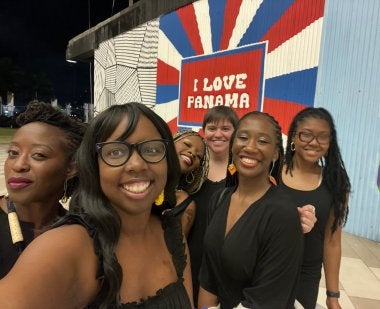
In January, University of Maryland students traveled to Panama and Ecuador in two new short-term study abroad programs led by College of Education faculty members and alums.
From January 12 to 21, Reka C. Barton, assistant professor of literacy education, and D’Kiya Bynum ’21, M.Ed. ’25 , a global learning advisor at Maryland Global, led 14 undergraduate and graduate students on a study abroad program to Panama City and Colón, a city with deep Afro-Panamanian roots.
Through the “Raciolinguistics and Representations Across Global Contexts” course, students examined the intersections of race, language and culture. They participated in a brief Spanish course, visited an Indigenous village, learned about Afro-Panamanian history on walking tours, and exchanged knowledge with students at the Universidad Metropolitana de Educación, Ciencia y Tecnología. UMD students kept reflective journals, participated in book clubs and visually documented language use.
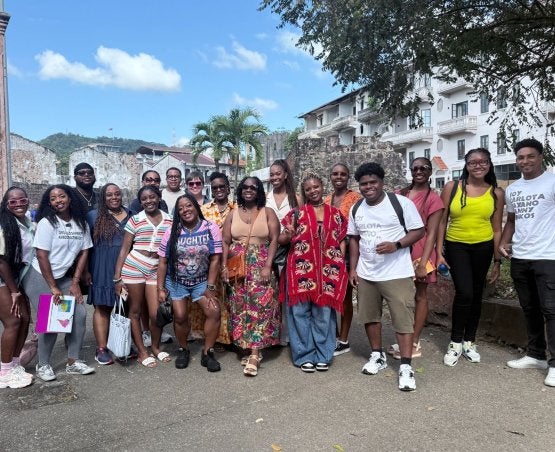
The program represented the inaugural cohort of the Seeing Me Initiative, which strives to recruit and center underrepresented populations in study abroad. The inaugural cohort focused on Black women; 78% of participants in the program were Black women, while just 6% of all U.S. study abroad participants are Black. Next year’s cohort will concentrate on first-generation students.
“I learned so much from proud Afro-Panamanians about the influence of the many countries of the African diaspora whose influence helped shape Panama’s rich culture and history,” says Carla E. Partlow MBA ’97, a doctoral student concentrating in student affairs and director of UMD’s Educational Talent Search Program.
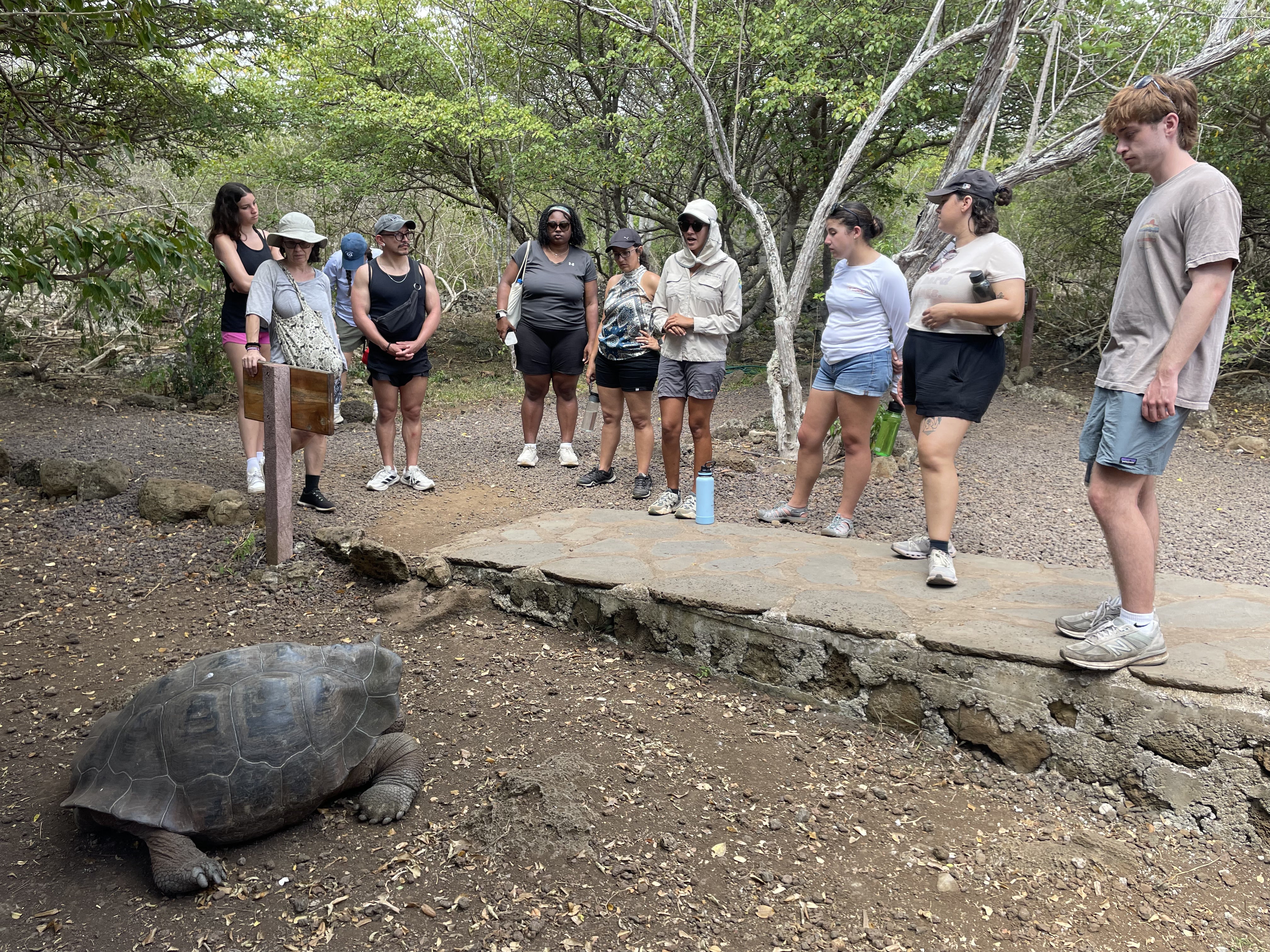
From January 10 to 22, eight undergraduate and graduate students traveled to Quito and San Cristobal Island in the Galápagos as part of the course “STEAM Education for Sustainability,” led by Associate Clinical Professor Beatriz Quintos, in collaboration with the Universidad San Francisco de Quito and the nonprofit organization MathKind.
Participants visited local schools, research institutes and historical sites to learn about STEAM (science, technology, engineering, arts/humanities and math) education for sustainability, as well as environmental research and Ecuadorian culture. The students participated in conservation work, stayed with host families and met with local educators, researchers and community leaders. They hiked, snorkeled and observed wildlife, including giant Galápagos tortoises and sea lions. Each student developed a project focused on sustainability and incorporating STEAM content and local culture.
“We got to truly know the communities we visited while understanding the everyday issues the region faces,” says Gianna Fogelbach Morales M.Ed. ’21, a doctoral student specializing in mathematics and science education. “I had experiences that deeply changed my life for the better, from swimming with a pod of wild dolphins, to the love and kindness the people of San Cristobal showed each of us.”