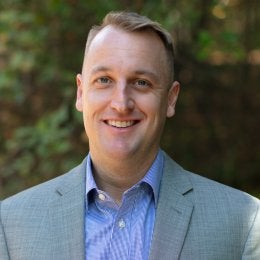
Charles Walters
Ph.D.
,
University of South Carolina
Charles "Charlie" Walters, PhD, is an Assistant Research Professor in the Center for Transition and Career Innovation (CTCI) at the University of Maryland. He works alongside education, rehabilitation, independent living, and employer systems to turn evidence and the expertise of disabled people into better services and outcomes.
Charlie is Principal Investigator of parallel studies with the Mid-Atlantic and Pacific ADA Centers, funded by the National Institute on Disability, Independent Living, and Rehabilitation Research (NIDILRR), examining disability disclosure and workplace accommodations under Title I of the Americans with Disabilities Act. He is also a Co-Investigator with the National Technical Assistance Center on Transition: The Collaborative (NTACT:C), serving on its evaluation and technical assistance teams. As an evaluator, Charlie leads the evaluations of the Maryland Inclusive Higher Education Consortium, a federally funded TPSID project, and BRIDGE CT, a Disability Innovation Fund model demonstration project in Connecticut, and evaluates UMD's TerpsEXCEED program. He also serves as a content expert and consultant for the Disability Innovation Fund National Technical Assistance Center. His scholarship spans three connected areas: collaboration across the systems that serve youth and adults with disabilities, including Centers for Independent Living; self-determination and supported decision-making; and disability-led approaches to evaluation. His work appears in journals including the American Journal of Evaluation, the Journal of Disability Policy Studies, and the Journal of Vocational Rehabilitation.
Before joining UMD, Charlie spent a decade in practice, including as Director of Transition Programs at Able South Carolina, a Center for Independent Living, and with CarolinaLIFE, the University of South Carolina's inclusive postsecondary education program. That experience grounds his commitment to research that the people and systems it studies can actually use. Charlie is a Research Fellow with the University of South Carolina's Center for Transition Research and Leadership, serves on the editorial boards of the Journal of Disability Policy Studies and the Journal of Rehabilitation, and reviews grants for NIDILRR and the Rehabilitation Services Administration. He earned his PhD in Special Education from the University of South Carolina.
Peer-Reviewed Articles
Plotner, A., & Walters, C. (2026). Reframing evaluative judgment and value in inclusive postsecondary education: A value on investment perspective. Intellectual and Developmental Disabilities. https://doi.org/10.1080/19349491.2026.2669148
Plotner, A., Smith Hill, R., Walters, C., & Shoemaker, A. (2026). Toward disability-led evaluation: A continuum framework for centering disability in evaluation practice. American Journal of Evaluation. https://doi.org/10.1177/10982140261441180
Walters, C., Smith Hill, R., Waldron, C., Russell, C., Mansour, C., Badger, J., Deibler, E., & Shogren, K. (2025). Reimagining self-determination in research, education, and disability services and supports. Journal of Disability Policy Studies. https://doi.org/10.1177/10442073251404904
Allison, M., Crane, K., Allison, R., & Walters, C. (2025). Leadership perspectives on organizational strategies driving success in state vocational rehabilitation agencies. Rehabilitation Counseling Bulletin. https://doi.org/10.1177/00343552251355342
Walters, C., Seipp, J., Plotner, A., & Crane, K. (2025). State differences in the transition service delivery of Centers for Independent Living. Journal of Vocational Rehabilitation. https://doi.org/10.1177/10522263251356238
Plotner, A., Smith Hill, R., Walters, C., & Rother, Y. (2025). Contextualizing disability identity in the academic literature: A scoping review. Identity. Advance online publication. https://doi.org/10.1080/15283488.2025.2481133
Walters, C., Smith Hill, R., Plotner, A., & Springgate, A. (2025). Special education professional perspectives on challenges to supporting youth with disabilities and their families into legal adulthood. Education and Training in Autism and Developmental Disabilities, 60(1), 35-48.
Plotner, A., Starrett, A., Walters, C., & Smith Hill, R. (2024). An examination of transition professional profiles based on value-based principles: A latent profile analysis. Developmental Disabilities Network Journal, 4(2), 102-126. https://doi.org/10.59620/2694-1104.1105
Walters, C., Plotner, A., & Crane, K. (2024). Investigating trends in the youth transition service delivery and consumer demographics of Centers for Independent Living. Journal of Vocational Rehabilitation, 61(2), 175-184. https://doi.org/10.3233/JVR-240033
Walters, C., Smith Hill, R., & Plotner, A. (2024). Advancing supported decision-making through special education professional advocacy. Inclusive Practices, 3(3), 61-68. https://doi.org/10.1177/27324745241265088
Plotner, A., Walters, C., & Rother, Y. (2024). Examining a leadership development initiative for college students with intellectual and developmental disability: A brief report. Journal of Vocational Rehabilitation, 60(3), 321-326. https://doi.org/10.3233/JVR-240016
Plotner, A., Walters, C., & Gonzales, S. (2024). Exploring special education and Center for Independent Living professional beliefs on collaboration and the value-based principles that drive secondary transition service delivery. Journal of Disability Policy Studies, 34(4), 266-277. https://doi.org/10.1177/10442073221131284
Walters, C., & Plotner, A. (2023). A Delphi study to generate, clarify, and prioritize professional recommendations on age of majority-related practice in special education. Journal of Disability Policy Studies, 35(3), 185-197. https://doi.org/10.1177/10442073231185740
Walters, C., & Plotner, A. (2023). Centers for Independent Living and secondary transition service delivery for students with significant disabilities. Journal of Rehabilitation, 89(1), 38-42.
Walters, C., Plotner, A., & Oertle, K. (2023). Perceptions of special education teachers on guardianship and alternative options for adult decision-making support. Journal of Rehabilitation, 88(3), 4-10.
Shoemaker, A., Plotner, A., Walters, C., Bloom, M., & Mojica, A. (2023). Inclusive postsecondary education provider perspectives of stressful situations for college students with an intellectual disability. Journal of Inclusive Postsecondary Education. https://doi.org/10.13021/jipe.2023.3248
Smith Hill, R., Walters, C., Stinnett, C., & Plotner, A. (2022). Social work as social justice: Supporting the autonomy of youth with disabilities through alternatives to guardianship. Child and Adolescent Social Work Journal, 40(4), 503-513. https://doi.org/10.1007/s10560-022-00895-9
Plotner, A., & Walters, C. (2022). The importance of Centers for Independent Living supporting youth with disabilities: A critical contribution to maximize transition service delivery. Career Development and Transition for Exceptional Individuals. https://doi.org/10.1177/21651434221116310
Walters, C., Plotner, A., Allison, M., & Mojica, A. (2022). An exploratory study of special education director experiences with issues related to age of majority, guardianship, and alternative options for adult decision-making support. Journal of Special Education Leadership, 35(1), 18-32.
Plotner, A., & Walters, C. (2021). Perceptions of district- and school-level special education leaders on guardianship and adult decision-making support. Journal of Disability Policy Studies. https://doi.org/10.1177/10442073211006395
Book Chapters
Plotner, A., Walters, C., Smith Hill, R., & Reynolds, M. (in press). Community and technical colleges as a pathway to careers for youth with disabilities. In P. Wehman, J. Taylor, H. Whittenburg, & L. Avellone (Eds.), Life beyond the classroom. Brookes Publishing.
Plotner, A., Mazzotti, V., Kwiatek, S., Chang, W., Check, A., Mojica, A., & Walters, C. (2022). Evidence-based practices for secondary transition planning and supports for youth with autism spectrum disorder. In L. Chezan (Ed.), Guide to evidence-based practices for practitioners working with individuals with autism spectrum disorder. Rowman & Littlefield.
Walters, C., Imle, B., & Plotner, A. (2022). Age of majority in special education and the compliance-driven denial of student dignity and autonomy. In R. Williams (Ed.), Handbook of research on challenging deficit thinking for exceptional education improvement (pp. 420-435). IGI Global.
Plotner, A., Walters, C., Oertle, K., & Trach, J. (2020). Results-focused service delivery for the transition from high school to adult life. In D. Strauser (Ed.), Career development, employment, and disability in rehabilitation (2nd ed., pp. 315-330). Springer Publishing Company.
Evaluation Reports and Technical Assistance Products
Walters, C., Monahan, J., & D'Agati, A. (2026). Maryland Inclusive Higher Education Consortium (MIHEC) evaluation design. Think College, Institute for Community Inclusion, University of Massachusetts Boston. https://thinkcollege.net/resource/program-evaluation/maryland-inclusive-higher-education-consortium-mihec-evaluation-design
Walters, C., Allison, M., & Kuhlwein, M. (2025). Understanding the independent living network at the state level [Brief]. University of Maryland, Center for Transition and Career Innovation; National Technical Assistance Center on Transition: The Collaborative. https://transitionta.org/the-role-of-centers-for-independent-living-cil/
Walters, C., & Henry, M. (2025). A practical guide to data security and management for Disability Innovation Fund grantees. Disability Innovation Fund National Technical Assistance Center, New Editions Consulting. https://ncrtm.ed.gov/library/detail/practical-guide-data-security-and-management-disability-innovation-fund-grantees
Allison, M., Walters, C., Hoderewski, S., Michener, J., & Hall, T. (2024). Exploring the roles of Centers for Independent Living in the transition service delivery system [Research to practice brief]. University of Maryland, Center for Transition and Career Innovation; National Technical Assistance Center on Transition: The Collaborative. https://transitionta.org/the-role-of-centers-for-independent-living-cil/
Walters, C., & Allison, M. (2024). Centers for Independent Living and their role in the transition service delivery system [Research to practice brief]. University of Maryland, Center for Transition and Career Innovation; National Technical Assistance Center on Transition: The Collaborative. https://transitionta.org/the-role-of-centers-for-independent-living-cil/
Walters, C., & Allison, M. (2024). Setting the stage for Pathways to Partnerships: Engaging with Centers for Independent Living through community resource mapping [Research to practice brief]. University of Maryland, Center for Transition and Career Innovation; National Technical Assistance Center on Transition: The Collaborative. https://transitionta.org/the-role-of-centers-for-independent-living-cil/
Walters, C., & Jordan, S. (2023). Engaging youth with disabilities in the delivery of Pre-Employment Transition Services. Disability Employment TA Center. https://aoddisabilityemploymenttacenter.com/engaging-youth-with-disabilities-in-the-delivery-of-pre-employment-transition-services/
Plotner, A., Walters, C., Kelly, P. M., Livesay, S., Burnette, L., Thomas, V., & Blankenship, A. (2015). Project UNITE: A proposed framework for unifying South Carolina PSE programs and South Carolina Vocational Rehabilitation to enhance employment outcomes and systems of support. https://thinkcollege.net/sites/default/files/files/resources/USC-Project-UNITE-May-2015-Draft.pdf
Public Scholarship
Walters, C. (2026). Supported decision-making as an everyday classroom practice. DADD Express, 36(4), 1-3. https://daddcec.com/publications/dadd-express
Walters, C., Smith Hill, R., Plotner, A., Keck, A., & Wang, H. (2024). Supporting college students with intellectual disability through living and learning communities (Think College Insight Brief No. 62). University of Massachusetts Boston, Institute for Community Inclusion. https://thinkcollege.net/resource/campus-life/supporting-college-students-with-intellectual-disability-through-living-and
Walters, C., & Stinnett, C. (2022). Navigating guardianship and adult decision-making support in inclusive higher education programs. Impact: Feature Issue on Inclusive Higher Education for People with Intellectual, Developmental, and Other Disabilities, 35(1), 46-47. https://ici.umn.edu/series/14
Yell, M., & Walters, C. (2022). Mahanoy Area School District v. B.L. (2021): The U.S. Supreme Court and off-campus student expression. RETHINKING Behavior, 5(2), 45-48. https://mslbd.org/what-we-do/rethinking-behavior/rethinking-behavior.html
Walters, C., Stinnett, C., & Plotner, A. (2021). Industry recognized credentials in inclusive postsecondary education programs for students with intellectual disability (Think College Insight Brief No. 51). University of Massachusetts Boston, Institute for Community Inclusion. https://thinkcollege.net/resource/student-credentials/industry-recognized-credentials-in-inclusive-postsecondary-education
Walters, C. (2021). Can we due (process) better? SPED Law Blog. https://spedlawblog.com/2021/11/08/can-we-due-process-better-by-charles-walters/