

2026 CEii Summer Leadership Conference Agenda
Conference Agenda
From Keynote Sessions to Hands-On Learning & Networking Experiences
Explore What's In Store!
Day 1 - Wednesday, June 24, 2026
Connection & Opening

| 
| 
| |||||||||||||||||||||||||||||||||||||||||||||||||||||||||||||||||||||||||||||||||||||||||||||||||||||||||||||||||||||||||||||||||||||||||||||||||||||||||||||||||||||||||||||||||||||||||||||||||||||||||||||||||||||||||||||||||||||||||||||||||||||||||||||||||||||||||||||||||||||||||||||||||||||||||||||||||||||||||||||||||||||||||||||||||||||||||||||||||||||||||||||||||||||||||||||||||||||||||||||||||||||||||||||||||||||||||||||||||||||||||||||||||||||||||||||||||||||||||||||||||||||||||||||||||||||||||||||||||||||||||||||||||||||||||||||||||||||||||||||||||||||||||||||||||||||||||||||||||||||||||||||||||||||||||||||||||||||||||||||||||||||||||||||||||||||||||||||||||||||||||||||||||||||||||||||||||||||||||||||||||||||||||||||||||||||||||||||||||||||||||||||||||||||||||||||||||||||||||||||||||||||||||||||||||||||||||||||||||||||||||||||||||||||||||||||||||||||||||||||||||||||||||||||||||||||||||||||||||||||||||||||||||||||||||||||||||||||||||||||||||||||||||||||||||||||||||||||||||||||
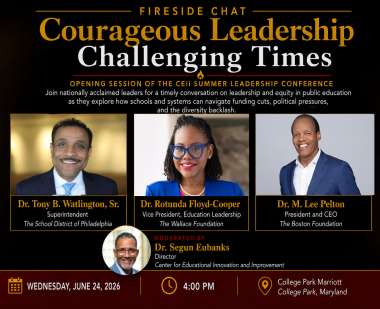
Kicking off the Summer Leadership Conference with meaningful connections, dynamic conversations, and collaborative engagement. From the Golf Networking Experience to the Featured Fireside Chat and the Evening Reception, Day 1 sets the stage for three days of Leadership, Innovation, and Impactful Learning alongside education leaders from across the region.
Time | Event | Location |
|---|---|---|
8:00 - 2:00 | Golf Networking Experience | UMD Golf Course |
3:00 - 4:00 | Opening Session | UMD Golf Course |
4:00 - 500 | Fireside Chat | UMD Golf Course |
5:00 - 6:00 | Conference Evening Reception | UMD Golf Course |
Day 2 - Thursday, June 25, 2026
Leading Through Innovation, Equity & Improvement
Click each strand below for session descriptions.
Time |
Event |
Location |
|---|---|---|
|
8:00 |
Doors Open - Check-In Begins |
Marriott Lobby |
|
8:30 |
Breakfast |
Lobby/Main Meeting Room |
|
9:00 |
Opening Keynote |
Main Meeting Room |
|
10:00 |
Morning Strand Sessions Begin |
See Session Signage |
|
11:45 |
Leadership Lunch Panel |
Main Meeting Room |
|
12:30 |
Lunch |
Main Meeting Room |
|
1:30 |
Afternoon Strand Sessions Begin |
See Session Signage |
|
4:30 |
Closing Session |
Main Meeting Room |
Time: 10:15 - 11:30
Presenter(s):
Jazmin Pichardo, PTK Faculty & Co-Director of the Intergroup Dialogue Training Hub in the College of Education, University of Maryland, College Park
Carlton Green, Ph.D., Clinical Assistant Faculty & Co-Director of the Intergroup Dialogue Training Hub in the College of Education, University of Maryland, College Park
Session Title: When Niceness Gets in the Way: Courageous Leadership for Honest Dialogue in School Workplaces
Session Description:
In many school and district workplaces, 'niceness' operates as an informal but powerful leadership norm. While often associated with professionalism and collegiality, expectations of niceness can unintentionally discourage honest dialogue, limit meaningful feedback, and prevent leaders from addressing harm or inequitable practices. This interactive session examines how niceness functions within school workplace culture and how leaders can navigate these dynamics while maintaining trust and professionalism. Through case scenarios, structured reflection, and collaborative problem-solving, participants will explore common leadership dilemmas where the pressure to 'be nice' conflicts with the need to name concerns, address harm, or provide clear feedback. Facilitators will introduce practical strategies for setting expectations for honest dialogue, framing difficult conversations constructively, and responding productively when discomfort emerges.
Time: 1:30 - 2:45
Presenter(s):
William Blake, Author, The AI School Leader; BlakeEDU Educational Consulting Services LLC
Session Title: Leading with Intelligence: Innovating School Leadership Through Human-Centered AI
Session Description:
As K–12 leaders face increasing instructional and operational demands, this session explores how artificial intelligence can be leveraged as a strategic tool for sustainable improvement. Grounded in The AI School Leader and research on continuous improvement, instructional leadership, and technology integration, participants will examine how AI can enhance data analysis, feedback cycles, planning, and communication systems. Through case studies and simulations, participants will design context-specific solutions that strengthen equity, coherence, and professional judgment. Participants will leave with adaptable tools and an AI Leadership Action Plan to support ethical and scalable innovation.
Time: 3:00 - 4:15
Presenter(s):
Sarah Noland, Special Education Math Specialist, Doctoral Candidate (University of Maryland); Calvert County Public Schools
Lisa Yankanich, Ed.D., Supervisor of Student Services, Calvert County Public Schools
Session Title: One District's Journey to Advance Specially Designed Instruction (SDI) Through Improvement Science
Session Description:
Over the past four years, our district engaged in a deliberate, iterative process to design, test, and scale a comprehensive professional learning approach focused on Specially Designed Instruction (SDI). This session describes the district's multi-year journey through the development of a three-session course paired with job-embedded application. Grounded in adult learning theory and improvement science, the course was refined across multiple design cycles based on collaborative planning, educator feedback, implementation data, and coaching conversations. Participants will learn how the course evolved from a pilot with small cohorts of special educators to a scalable district-wide model supporting both general and special education teachers. Attendees will leave with practical insights and design considerations for building or refining professional learning systems in their own contexts.
Time: 10:15 - 11:30
Presenter(s):
Katya Denisova, Director of Professional Learning, Office of Academics, Baltimore City Public Schools
Session Title: From Disconnected PD to Coherent PL Systems: Building and Measuring a Districtwide Professional Learning Model in Baltimore City Public Schools
Session Description:
Professional learning systems in large school districts often struggle to achieve coherence between central office priorities and school-based implementation. This session presents a districtwide case study from Baltimore City Public Schools that restructures isolated district professional development sessions toward building a shared, coherent system of professional learning. Using the Learning Forward Standards, Cycles of Professional Learning, and a district-developed adult learning framework (DFAL), the district redesigned professional learning structures to create shared expectations, language, and accountability across roles. Key changes included replacing stand-alone sessions with yearlong learning arcs, awarding PDPs toward educator licensure renewal, and training school leaders and instructional coaches in adult learning design. Emerging evidence shows positive outcomes: over 900 educators have completed DFAL, including 300 school leaders, with 98% reporting applying course concepts in their work.
Time: 1:30 - 2:45
Presenter(s):
Denise Joseph, Former U.S. Department of Education Leader; Kodely Leader; Education Policy Expert; Co-Owner and Strategic Education Advisor, Prep Academy Tutors of Southern Maryland
Session Title: Leading Through Fiscal Contraction: Using School-Community Partnerships to Sustain Equitable School Improvement
Session Description:
As federal education funding declines and relief dollars expire, school and district leaders are facing complex decisions that directly affect staffing, student supports, and long-term improvement priorities. This session explores how leaders can leverage school–community partnerships as a core leadership strategy to sustain improvement efforts while protecting opportunities for historically marginalized students. Grounded in systems thinking and equity-centered leadership practice, this session examines how effective leaders navigate competing demands, align limited resources to high-impact priorities, and engage families and community stakeholders as co-architects of sustainable solutions. Participants will leave with leadership strategies and actionable tools to translate fiscal challenges into opportunities for collaborative problem-solving, equitable resource stewardship, and sustained school improvement.
Time: 3:00 - 4:15
Presenter(s):
Lyndsay Brown, Ed.L.D., Chief Strategy Office, Opportunity Consulting
Annie Crooks,Associate, Opportunity Consulting
Session Title: Avoiding the Implementation Breakdown: Turning District Plans into Measurable Results
Session Description:
Too often, improvement efforts move forward without clarity about what the work actually looks like in practice, what conditions are required for success, or how progress will be measured. The result is a familiar pattern: activity without evidence, and the implicit hope that “and then a miracle happens.” This session introduces an evaluation mindset as a practical approach to avoiding implementation breakdown and ensuring that improvement efforts lead to measurable impact. Grounded in improvement science and evaluation practice, participants will explore how to intentionally connect idea, implementation, and monitoring through three core components: a clear theory of action, a coherent logic model, and aligned measures of implementation, progress, and impact. By the end of the session, participants will leave with a clear, usable framework and concrete tools to move from idea to execution with greater precision—ensuring that their improvement efforts produce not just activity but sustained, meaningful results.
Time: 10:15 - 11:30
Presenter(s):
Andy Cole, Consultant, Wallace Foundation
Harrison Peters, CEO, MCEL
Session Title: The Unwritten Rules of Leadership: A Playbook for Developing and Retaining Leaders of Color
Session Description:
Districts are working to strengthen and diversify their leadership pipelines, yet many struggle to retain high-potential leaders of color once they enter leadership roles. Too often, these leaders are expected to navigate complex systems and unspoken expectations without a clear roadmap for success. This session introduces a practical leadership playbook grounded in MCEL’s Essential Competencies for Educational Leaders of Color, making explicit the “unwritten rules” that shape leadership success, sustainability, and advancement. Participants will explore how these competencies can be used to strengthen leadership pipelines, reduce burnout, and improve retention outcomes. Attendees will leave with actionable strategies, tools, and a clear plan to better prepare, support, and retain leaders of color in their districts.
Time: 1:30 - 2:45
Presenter(s):
Darryl Williams, Interim Assistant Chair for Administration and Program Director
Jeff Rhodes, Teacher Education and Professional Development
Session Title: I Am Who I Am: Equity-Centered Urban Leaders Revealed
Session Description:
This interactive session invites participants into the lived experiences of equity-centered urban school principals through dialogue, reflection, and rapid-response activities drawn from a pilot qualitative study of eight elementary and secondary urban principals. Using narrative excerpts and real-world scenarios, participants will explore the people, moments, and experiences that shaped these leaders' identities and commitment to equity-centered, transformative practice. Grounded in Black Scholarship and affirming Black Brilliance, the session centers asset-based insights to inform professional development, recruitment, retention, and sustainability strategies — challenging participants to rethink how we define, develop, and sustain transformative leadership in urban schools. Participants leave with concrete strategies to cultivate equity-driven leadership in their own settings.
Time: 3:00 - 4:15
Presenter(s):
Shannon Holder, Ed.D., Author of The Encyclopedia of Educational Equity: A Resource for Dialogue and Impactful Change, Manager, Family Resource Center, Fairfax County Public Schools; CEO, Onyx Equity Consulting / Changing the Trajectory LLC; Adjunct Faculty, George Mason University
Session Title:From Beliefs to Belonging: Building Equity-Integrated System in Schools
Session Description:
This interactive session introduces the Equity Integration Framework, helping leaders align mindset, policy, and practice to address systemic barriers and improve outcomes for historically minoritized students and families. Participants will leave with a practical, high-leverage strategy to build more inclusive, coherent systems that foster belonging and measurable impact.
Participants will explore how leadership assumptions about student potential, family partnership, and access to opportunity influence organizational routines, resource allocation, and instructional expectations. Through structured reflection and case-based discussion, attendees will analyze how common school practices may unintentionally reinforce inequities and identify strategies for designing more inclusive structures. Participants will engage in collaborative dialogue and guided planning to identify one high-leverage change aligned to their local context.
Time: 10:15 - 11:30
Presenter(s):
Lindsey Allen, Maryland Initiative for Literacy and Equity (MILE)
Angelique Jessup, Maryland Initiative for Literacy and Equity (MILE)
Session Title: Beyond Special Education: Using MTSS in Cross-Disciplinary Literacy Leadership
Session Description:
Drawing on the multi-faceted research base of adolescent literacy—encompassing disciplinary reading and writing, vocabulary development, explicit comprehension instruction, and text complexity—and grounding that knowledge within a broad-access Multi-Tiered System of Supports (MTSS) framework, this session positions literacy leadership as a whole-school improvement strategy. Participants will explore how leaders at every level can move from disconnected initiatives to coherent, aligned systems. The session presents practical frameworks and tools for diagnosing current literacy gaps, mapping tiered instructional responses, and building cultures of trust that sustain growth even amid complexity and change.
Time: 1:30 - 2:45
Presenter(s):
Nakia Nicholson, Executive Leadership Coach & Educational Consultant; Founder, Holson Solutions
Session Title: Leading for Coherence: Designing Contextualized, Cross-Cutting Schools That Work
Session Description:
School leaders and instructional leadership teams are expected to improve outcomes while navigating increasingly complex instructional, organizational, and community contexts. Yet leadership efforts are often fragmented—treating curriculum, instruction, professional learning, and community engagement as separate initiatives rather than interconnected systems. This session examines how school leaders and instructional leadership teams can intentionally design contextualized, coherent school environments that cut across disciplines, grade levels, and community conditions to support sustained improvement. A central focus is the role of instructional coaching within core instructional leadership teams as a systems-design lever. Equity serves as a throughline, framed as the work of reducing fragmentation, minimizing instructional variance, and ensuring consistent access to high-quality learning experiences.
Time: 3:00 - 4:15
Presenter(s):
Darryl V. Johnson, Principal, Montgomery County Public Schools
Session Title: From Silos to Systems: A Cross-Functional Framework Leading to Equitable Student Outcomes
Session Description:
In many districts, the expertise for supporting emergent multilinguals and students with disabilities is siloed. This session explores how one school transitioned into a learning organization by implementing a district-wide, cross-functional team approach. It examines how shifting leadership focus from compliance-driven improvement planning to coherence can dramatically improve outcomes in ELA and Math for historically marginalized student populations. The session shares how the leadership team cultivated a culture of shared accountability, moving beyond departmental thinking to a unified strategy. Participants will examine specific frameworks used to align central office supports with school-level execution, ensuring that equity is the core driver of instructional cycles. Attendees will engage in a simulation of a cross-functional inquiry cycle, leaving with a 'Coherence Roadmap' to help audit their current collaborative structures.
Day 3 - Friday, June 26, 2026
Alignment, Sustainability & Transformational Impact
Click each strand below for session descriptions.
Time |
Event |
Location |
|---|---|---|
|
8:00 |
Breakfast |
Main Meeting Room |
|
9:00 |
Morning Strand Sessions Begin |
See Session Signage |
|
12:00 |
Closing Keynote |
Main Meeting Room |
Time: 9:00 - 10:15
Presenter(s):
Kenneth Nance, Middle School Principal, PGCPS; Licensed Massage Therapist & Medical Massage Practitioner
Session Title: Regulating the System: Leadership, Neuroscience, and the Physiology of Sustainable School Improvements
Session Description:
Across K–12 systems, leaders are being asked to accelerate improvement while navigating unprecedented levels of educator stress, burnout, and organizational fatigue. This interactive session introduces a leadership framework that integrates educational leadership, neuroscience, and wellness science to help leaders build healthier and more resilient improvement cultures. Drawing on lived experience as a Title I middle school principal and licensed medical massage practitioner, the session explores how the body's stress response system—including cortisol, dopamine, serotonin, oxytocin, and endorphins—directly influences decision-making, collaboration, and organizational culture. Participants will examine the role of the vagus nerve and the autonomic nervous system in regulating stress, and explore wellness-informed leadership routines and organizational structures that reduce burnout while strengthening coherence and performance.
Time: 10:30 - 11:45
Presenter(s):
Jean Snell, Ph.D., Associate Director, UMD Center for Educational Innovation and Improvement
Session Title: Cultivating the Conditions for Continuous Improvement: The Essential Improvement Dispositions
Session Description:
While improvement leadership can be catalyzed by utilizing the tools and framework of improvement science, in this session participants will explore the foundational dispositions or "habits of mind" of improvement. Participants will assess their own strengths and areas for growth in terms of their improvement dispositions, and they will strategize how they can cultivate one or more improvement habits with their own school or district teams.
Time: 9:00 - 10:15
Presenter(s):
Zachary Jaffe, Manager, Continuous Improvement, Baltimore City Public Schools
Amiee Winchester, Director, Continuous Improvement, Baltimore City Public Schools
Session Title: Multiplying Our Success: Replicating Successful NIC Launch Practices to Improve Math Fluency
Session Description:
In SY23–24, Baltimore City Public Schools launched its third Networked Improvement Community (NIC): the Math Improvement Network for Teachers (MINT) Fellowship. Rather than starting from scratch, the district's Office of Continuous Improvement intentionally replicated and adapted successful launch practices from earlier NICs to move more quickly, build early coherence, and create stronger conditions for measurable, sustainable improvement. Presenters will share how foundational launch practices helped streamline the launch of MINT, enabling the network to build coherence more quickly and move sooner into improvement. The session highlights how leaders used data, practitioner feedback, and PDSA cycles to study early implementation, test assumptions, and refine the work over time. Although grounded in math fluency, this session is really about accelerating the launch of new improvement efforts.
Time: 10:30 - 11:45
Presenter(s):
Courtni Ball, Ed.D., Instructional Specialist, Accountability, Prince George's County Public Schools
Felice DeSouza, Ed.D., Supervisor Accountability, Prince George's County Public Schools
Session Title: Beyond the Surface: Using Data to Diagnose the Real Problem of Practice
Session Description:
Identifying the 'right' problem is a critical step in any continuous improvement journey, yet teams often rush toward solutions before fully understanding root causes. This practice-oriented session is designed for practitioners and leaders who want to move beyond surface-level observations to identify authentic, actionable problems of practice. Guided by the Improvement Strand's focus on cycles of inquiry, this session introduces participants to a 'Diagnostic Toolkit' featuring empathy interviews, observations, data analysis protocols, process maps, and the Five-Whys protocol. Rather than discussing theory, participants will engage in a 'Simulated Inquiry Cycle,' working with specific data sets ranging from qualitative interview transcripts to quantitative performance metrics. By the end of the session, participants will synthesize their findings to draft a formal problem of practice statement, leaving with a clear framework and ready-to-use tools.
Time: 9:00 - 10:15
Presenter(s):
Christine Neumerski, UMD-Senior Research Fellow, CEii
Daryl Howard, MCPS- Instructional Specialist, System-wide Equity
Lorenzo Hughes, AACPS- Senior Manager for School Support and Equitable Practices
Jason Ray, PGCPS-Director, Equity, Diversity & Belonging
Jennifer Turner, UMD- Professor
Awilda Rodriguez, UMD- Associate Professor
Tracy Sweet, UMD- Associate Professor
Session Title: The Why, How, and What's Next of the RSJC RPP
Session Description:
“Indeed, the action-oriented, egalitarian, and agentic characteristics of RPPs make them ripe for advancing educational equity and racial justice when explicitly designed, implemented, and continuously adapted to do so.” - WT Grant Foundation
This informative and engaging session will share insights into the change management process for equity work of school districts and the benefits of a research practice partnership (RPP) through engagement with district equity leaders. The Racial and Social Justice Collaborative (RSJC) is an RPP among the University of Maryland, Anne Arundel County Schools, Prince George's County Public Schools, and Montgomery County Public Schools. Attendees will be exposed to the benefit and value of research practice partnerships, learn how existing equity work looks in school districts, and gather insights as to how the work moves further when K12 and university partners work collaboratively to impact long standing inequities..
Time: 10:30 - 11:45
Presenter(s):
Rosalyn Rice-Harris, Founder & Senior Consultant, CDM Strategy Group
Session Title: Fix Tier 1 First: Reclaiming Core Instruction as the Most Powerful Equity Strategy
Session Description:
For decades, schools have responded to persistent achievement gaps by expanding Tier II and Tier III interventions. Yet research consistently shows that when core instruction is inconsistent, misaligned to grade-level standards, or implemented without coherence, interventions cannot compensate for opportunity gaps created upstream. For Black students and other historically marginalized learners, this overreliance on remediation often reinforces inequitable access to rigorous learning rather than dismantling structural barriers. This session advances a research-informed premise: Tier I instruction, not intervention, is the most powerful equity lever available to schools and systems. Through a structured Tier I Health Check and a Leadership Action Map, participants will diagnose their current instructional systems and identify high-leverage leadership moves to strengthen equitable Tier I implementation.
Time: 9:00 - 10:15
Presenter(s):
LaTanya Sothern, Principal, Prince George's County Public Schools
Session Title: Courageous Alignment: Leading Equity-Centered Improvement in Complex School Systems
Session Description:
Across school systems, leaders are often asked to advance equity, implement continuous improvement, and foster innovation simultaneously. Too often, these priorities compete rather than cohere, resulting in initiative overload, fragmented implementation, and uneven impact for historically marginalized students. This interactive session explores courageous alignment as a leadership practice that integrates equity, improvement, and instructional coherence into a unified system of action. Drawing on research in systems leadership and equity-centered organizational change, alongside school-based case examples from an urban elementary context, the session examines how leaders translate equity commitments into daily practice. Participants will engage with a practical alignment framework to diagnose misalignment across structures, practices, and adult behaviors, and will leave with a research-informed framework, practical tools, and concrete next steps for courageous leadership action.
Time: 10:30 - 11:45
Presenter(s):
Dia Jackson, Ed.D., Senior Researcher, American Institutes for Research (AIR)
Session Title: Five Hallmarks of Effective Principal Leadership through MTSS
Session Description:
Leadership plays a vital role in designing school systems that enable students who struggle and students with disabilities to learn, grow, and thrive alongside their peers. This session shares the MTSS framework—a research-based prevention framework for school improvement and student supports—with an emphasis on the role of leaders in improving outcomes for students with disabilities. The presenter will share the Five Hallmarks of Effective Principal Leadership (set a clear vision; develop a culture of collaboration; analyze the right data; build staff capacity through high-quality professional learning; ensure accountability and fidelity across tiers), along with the MTSS Fidelity Assessment tool, real-world examples, and research-based strategies to guide leader development. School and district leaders will leave with concrete strategies to improve outcomes for all students and the opportunity to engage with a national expert in special education and MTSS.