In 2023, the U.S. Supreme Court’s decision to restrict race-conscious college admissions policies in two landmark cases—Students for Fair Admissions (SFFA) v. Harvard and SFFA v. the University of North Carolina, Chapel Hill—upended longstanding college admissions policies and practices nationwide.
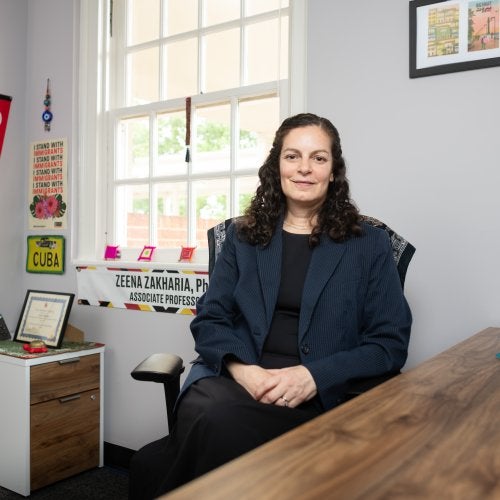
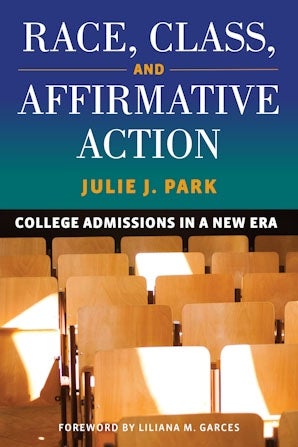
Julie J. Park, professor of education at the University of Maryland, studies equity and diversity in higher education, with a focus on college admissions. She served as a consulting expert on the side of Harvard in SFFA v. Harvard, and her recent book, “Race, Class, and Affirmative Action: College Admissions in a New Era,” presents a timely analysis of the higher education landscape in a post-SFFA world.
In an interview, Park unpacked the consequences of the Supreme Court rulings, how institutions can lead the way in increasing access and inclusion in college admissions, and why she feels hopeful about the future.
What are some of the biggest misconceptions about race-conscious admissions?
People don’t realize that under race-conscious admissions, looking at race is just a relatively small part of the process. Admissions officers could consider students’ race in understanding their context for opportunity and what they may contribute to campus and society. It was never some sort of formula that guaranteed admission. Admissions overall is very holistic, looking at all parts of the student.
How does a diverse college student population benefit both students and society?
There are many different bodies of research looking at everything from how diverse teams tend to come up with more innovative solutions, to how learning from students who have different experiences can contribute to a richer learning environment. Due to residential and school segregation, students often don’t have a lot of experience interacting across racial/ethnic backgrounds before college. College can provide a unique opportunity to disrupt this cycle, and engaging with racial diversity during the college years is linked with positive postcollegiate outcomes.
What has been the impact of the SFFA decision on the college admissions process and student diversity?
After that decision, race-conscious admissions is restricted. The old way of doing race-conscious admissions has cycled out, but the court ruling did say that campuses can still consider a student’s race/ethnicity if they choose to talk about it, like through an essay.
The most obvious impact has been on highly selective institutions. At a number of those schools, we’ve seen really alarming drops in Black and, to some extent, Latinx enrollments.
We’re concerned about a cascade effect. Some Black and Latinx students aren’t able to attend an elite institution now, so they attend the state flagship, and then other Black and Latinx students aren’t able to attend the state flagship anymore, so they cascade down to a regional, community or for-profit college. Regional and community colleges do a lot to support students, but on average, students tend to have more adverse outcomes, and regional colleges are usually underfunded. Many for-profits have predatory practices and leave students with a high amount of debt.
On February 14, 2025, the U.S. Department of Education issued a “Dear Colleague” letter that broadly interpreted SFFA to restrict efforts to advance on diversity, equity and inclusion in education, beyond just college admissions. What effect did this have on higher education?
Even though the Dear Colleague letter was eventually overturned, the damage has been done. A lot of institutions have pulled back on more public-facing support for diversity and for students of color. In some cases, they’ve cut support for student groups or they’ve changed programming. Overall, I would argue it’s an overcorrection, that people are going out of their way out of fear.
What do you think would have been a more appropriate response?
To stay the course, ideally. In Wisconsin, for instance, there’s a race-conscious program where Black, Latinx, Native American and Southeast Asian American students are eligible for small retention grants to help them stay in school. A group came after the grant and said, “This violates SFFA,” and Wisconsin pushed back. The state attorney general has successfully petitioned to go before the state supreme court to defend this program. He makes an argument that SFFA does not apply to this program because they exhausted race-neutral alternatives and they specifically need a race-conscious program.
I think that provides a nice blueprint for how institutions could say, “Hey, just because race-conscious admissions is restricted, that does not necessarily automatically apply to everything that has to do with race on a college campus.”
What are some current policies and practices that contribute to inequity in the college admissions process?
One is that public universities recruit heavily out of state. And they don’t just go to any high school. They specifically go to predominantly white high schools that are wealthy, because they want to attract students who could pay non-resident tuition, which is higher. That diminishes the number of seats that are available for in-state students. This can have real repercussions because for a lot of first-generation and low-income students, it’s hard to even imagine going to college, but it can become a lot more accessible if that school is in driving distance or if they have some name recognition. I argue that state flagships have this very special responsibility to protect access. That’s why they were founded or funded by the government through the Morrill Act.
Also, many colleges are relying on early decision policies more heavily. That obviously benefits students who know upfront that they can pay full price.
It would be great to see changes to other admissions policies, as well. For instance, preferences for athletes tend to disproportionately benefit wealthier white students. Reducing those or getting rid of them would go a long way towards creating a more equitable campus. But institutions are reluctant to let go of them, unfortunately.
What about the actual application itself? You wrote in your book about test-optional policies and inequities in recommendation letters, for example.
Test-optional is not perfect, but I do think it’s an improvement over test-required. I think test-optional could be improved. Test scores are not one size fits all. Students may think their test scores are not competitive if they’re not in the 75th percentile, but admissions officers may view that test score more positively in some communities. Colleges could provide instructions on their websites: “If you are from this type of high school, or if you consider yourself working class, consider submitting your test score if it’s within this range, because we will see it as an asset.”
You could also create a word cap on letters of recommendation because there are disparities between public and private schools in the length and type of content covered in those letters.
How do you envision a truly equitable and inclusive future for college admissions and higher education?
Will we have a truly equitable system? I don’t think so, just because that would require a different country than what we have. But a more equitable system would be one where, first of all, there aren’t blatant privileges for people who are already privileged. And for people who historically have not had access to these types of resources or networks, one where they are not inhibited, and one that could capture talent that cuts across all different groups.
You wrote that writing the book made you “surprisingly hopeful.” What made you feel that way?
Reading other people’s work that I cite who say, “Yes, there are options.” There are even remaining legal options to bring back a version of race-conscious admissions. Is it going to happen? Not in this political climate, but it was helpful for me to know that some of these doors that feel shut technically have openings.
When I go around the country and I meet people who are working in admissions and enrollment management who are just so committed and passionate, even though their toolkits are somewhat diminished, that also gives me hope. And working with my students and seeing how important it is to give students from different walks of life a pathway to higher education.
These are hard times, but we’ve been in hard times before and somehow there’s still progress. We’re in a hard patch, but I do hope for better times.