

Through a new partnership between the University of Maryland College of Education and Prince George’s County Public Schools, the Bullying Literature Project is bringing an innovative approach to bullying prevention directly into language arts instruction. Rather than treating bullying as a separate topic, the project embeds social-emotional learning (SEL) and bullying prevention into everyday classroom experiences to help elementary school students connect what they read with how they act.
“Many bullying prevention programs don’t show long-term impact because they’re not integrated into students’ daily learning,” said Associate Professor of School Psychology Cixin Wang, who developed the project. “When students see these skills as separate from their academic work, they’re less likely to use them outside of that context. This project changes that.”
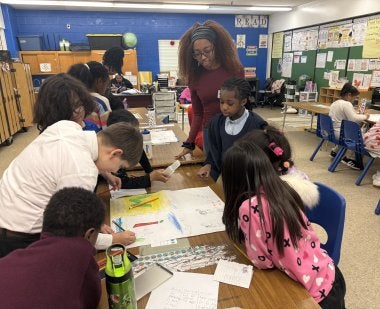
Wang, along with a small team of graduate students in the school psychology program, are currently working with four third grade classrooms at Brandywine Elementary School in Brandywine. Over the course of their five-session classroom-based interventions, students participate in guided reading and discussion and hands-on activities designed to build empathy, strengthen social skills and boost positive peer interactions, all while also encouraging positive bystander intervention.
Each week, students engage with stories that reflect real-life challenges. They compare themselves with characters in the books, create comic strips or stories that reimagine bullying scenarios, and write and act out their own scripts.
“We’re helping students make connections between what they’re reading and their own experiences,” explained Wang. “That’s how they begin to internalize skills that can prevent bullying and create a positive climate.”
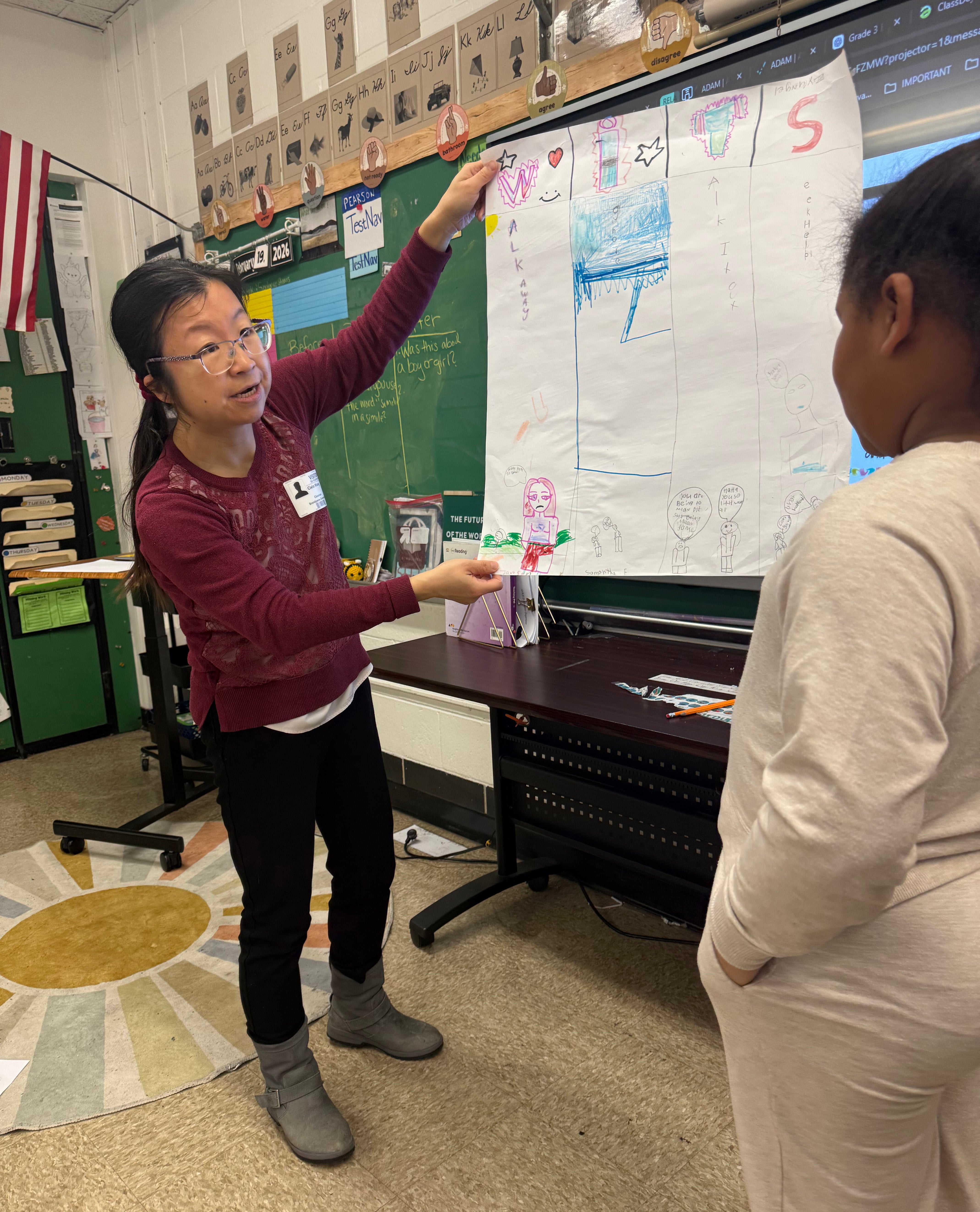
At the center of the project are the Walk Away, Ignore, Talk it Out and Seek Help (WITS) strategies that provide students with clear, practical tools to navigate conflict and respond to bullying. By practicing these strategies through storytelling and role-play, students build both confidence and competence.
In each session, students close with a shared commitment: a promise to use their WITS strategies and to help others do the same to make their school a safe and fun place to be and learn. This approach helps reinforce a sense of collective responsibility for creating a safe and welcoming environment.
Bullying remains a widespread issue in K-12 schools, with research showing significant impacts on students’ mental health, behavior and overall school experience. Traditional prevention programs often struggle to take hold in schools, where teachers have limited time and resources.
By embedding bullying prevention into core language instruction, the Bullying Literature Project offers a more sustainable path forward.
“Teachers are already doing the work of teaching reading and writing,” said Wang. “When we integrate bullying prevention into that, it becomes part of the classroom culture and not an add-on.”
As the partnership continues, Wang is focused on both expanding and evaluating the program. Data collection is underway to assess changes in students’ experiences, including reductions in bullying victimization and attitudes that tolerate bullying, and increases in positive bystander behavior.
Looking ahead, she envisions broader implementation and long-term sustainability. With additional funding, the project aims to reach more students, provide training for teachers and college students, and develop online modules that allow schools to independently adopt the program.
“Our goal is to create something that schools can continue using well beyond this initial phase,” she said. “We want to equip educators with the tools they need to foster safe, inclusive environments for all students.”
Early feedback suggests the approach is working.
“Students and teachers have shared that they really like the program,” said Wang. “Some students have already told their teachers that they’re using WITS strategies at school and at home.”