
Higher education leads to a long list of benefits. Its most obvious payoff is earnings. As of 2024, the median weekly income for a college graduate was $1,533, compared with the $946 median weekly income of high school graduates, according to the U.S. Bureau of Labor Statistics. But the value of higher ed goes farther, exposing students to mentoring and professional training, helping them discover a lifelong love of learning and placing them firmly on a path to self-discovery.
Beyond the personal, however, higher ed has a positive impact on a societal level. From the ability to work with others across the political spectrum, to the opportunity to meet and build relationships with people from a wide swath of diverse backgrounds, to developing the desire to make positive changes in society, University of Maryland College of Education researchers and their students are demonstrating the critical role higher ed plays in society—and a healthy democracy.
Today, more than ever, there’s a need for civic engagement. The nation’s future may rest on citizens’ ability to hear each other out, appreciate the nation’s rich tapestry of backgrounds and invest in keeping democracy alive. Higher ed may be a key to achieving those goals.
Higher ed sparks lifelong civic engagement
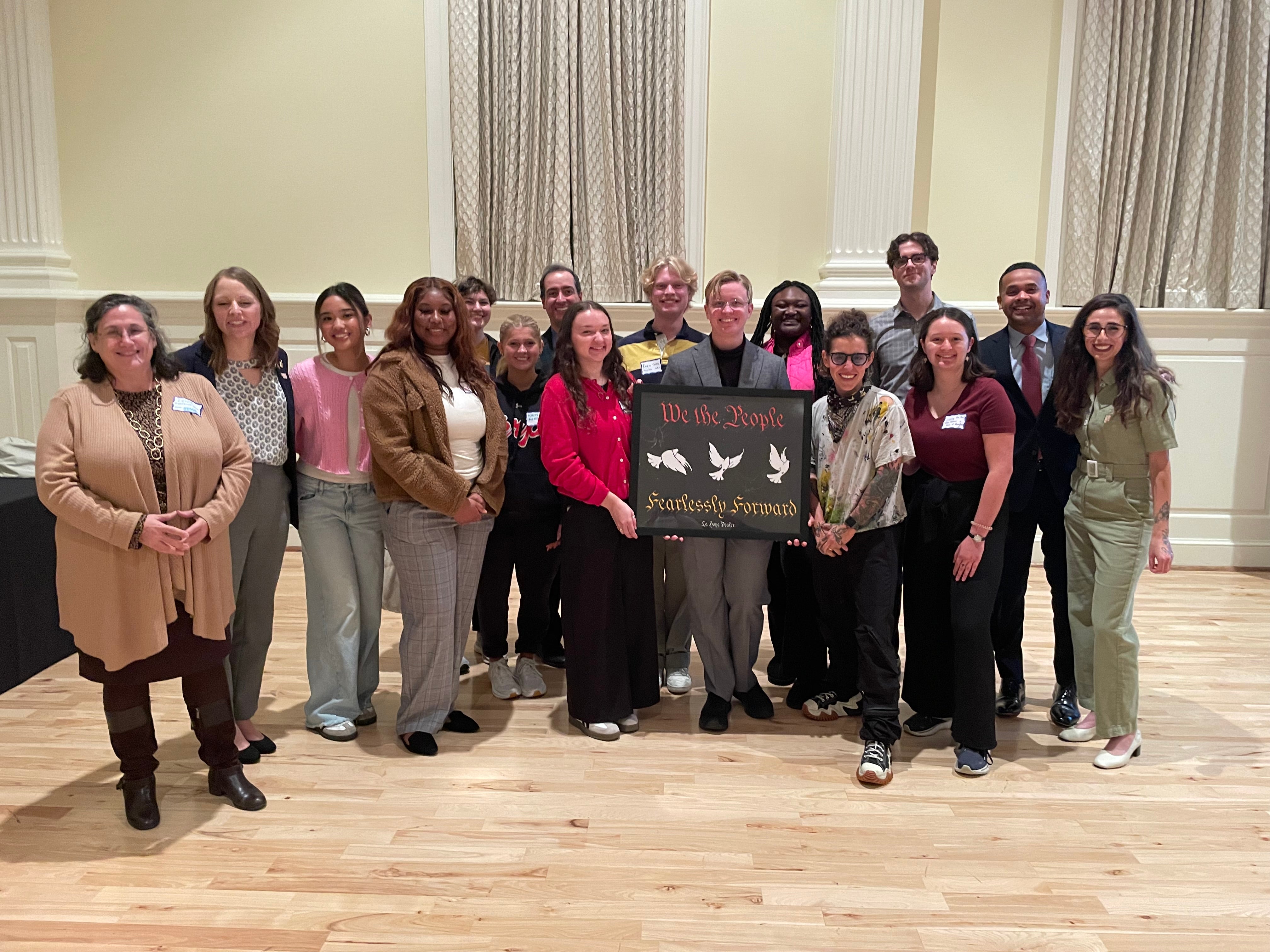
From where she stands as director of the College of Education’s Civic Education and Engagement Initiative and principal investigator of the university’s Maryland Democracy Initiative (MDI), Lena Morreale Scott sees higher education as a unique setting to foster a healthy and engaged society.
“We have an unparalleled range of experiences and expertise, which puts folks in a unique position to collaborate across disciplines,” she said. “We can take risks and dig deep to solve problems.”
In addition, universities have a unique role because they are oriented to helping students prepare for their futures, which includes career readiness and preparation to help them participate fully in their civic life, Scott explained.
Within MDI, the team is focused on teaching civic knowledge and skills—they encourage eligible students to vote and also to be informed about the candidates and issues on the ballot, for instance. They support faculty and staff to provide meaningful service learning experiences for students that enable them to weave together what they are learning in class and in the community. For example, while it is commendable to volunteer at a food pantry, the learning will be deeper and the impact greater if the students also learn about the root causes of food insecurity and can learn to advocate for policies that better serve people who are facing hunger.
Funded by a Grand Challenges Impact Award from UMD and gifts from Marsha Zlatin Laufer ’64 and Henry Laufer, MDI is now in its third year. MDI is the collaboration of four disciplines at UMD: education, journalism, political science and public policy, and it collaborates with civic organizations, the media and schools. The initiative has so far backed student service learning; a project to help middle school students determine the credibility of online information; a voting rights and voting mobilization project; and a voter guide highlighting the stances of every school board candidate in the state, among other projects.
Higher ed leads to giving back
Stephanie Breen Ph.D. ’23, director of research at the Strada Education Foundation, has taken an in-depth look at the value of higher ed for Black, Latine and Indigenous students. As lead author of the Pell Institute and Lumina Foundation’s report “Is College Worth It?”, Breen and her team surveyed 1,801 undergraduate students of color nationwide who identified as first-generation and low-income and who participated in federally funded TRIO programs during their undergraduate studies. They concluded that “students recognize the broader societal impact of their education, particularly in terms of civic engagement and social justice.”
In the survey, 87% of respondents agreed or strongly agreed that their college degrees have the “potential to make a positive impact on society.” Likewise, 78% of the students agreed or strongly agreed that “My college education has given me the skills to effectively advocate for causes I care about.”
What really stood out to Breen was that the surveyed students were intentional about using their degrees to effect meaningful change. “This ranged from opening a business in an underserved neighborhood to increase access to healthy food, to pursuing advanced degrees focused on researching and addressing environmental inequities,” she said. “They weren’t just seeking a good job with their education—they were committed to leveraging their knowledge and skills to give back to their communities and create lasting impact.”
While Breen worries about the current state of democracy, it’s the next generation of students that give her hope. “These students are revolutionary in so many ways,” she said. “They take pride in pursuing careers with the goal of leading in their fields, shaping systems and improving outcomes for their communities and generations to come—standing firm in that purpose no matter the context.”
Higher ed cultivates more tolerance and humility
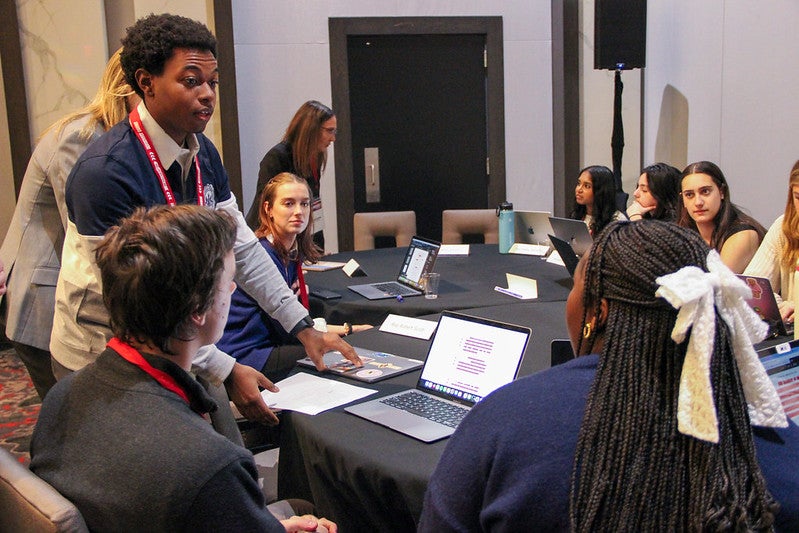
Today’s divided political scene is often evident in loud shouting matches and viral social media posts. Can higher education serve as an antidote to those contentious displays? That’s the question Alberto F. Cabrera, professor emeritus of higher education in the College of Education, wanted to answer. Along with David Weerts, professor of higher education at the University of Minnesota-Twin Cities, Cabrera co-authored a recent article in the Journal of College and Character examining that question. Their work was supported by the American Center for Public Leadership at Southeastern University.
The researchers drew on data from 4,990 respondents to the National Survey on America Civic Health to analyze essential civic virtues, or a set of character attributes that promote productive participation in a democratic society. These include tolerance for political disagreement and humility in engaging others’ perspectives with an open mind.
“We wanted to understand what elements matter in developing a person who can welcome other views,” said Cabrera. “We looked at family, high school, community and collegiate experiences.”
The researchers found that, on average, people who earned a bachelor’s or graduate degree had 13-14.4% higher levels of tolerance and humility than those with a high school education or less. Their findings cautiously point to the idea that universities may be places that nurture willingness to engage across political divides—quite the opposite of the argument that colleges indoctrinate students and don’t tolerate certain political viewpoints.
“The elements are there,” said Weerts. “But you need the correct people to embrace confident pluralism”—the idea that people can coexist peaceably despite their differences.
Cabrera and Weerts theorize that higher education can allow students to develop cognitive flexibility, which in turn promotes new beliefs and mindsets. This cognitive flexibility can foster greater tolerance toward people holding different ideologies and worldviews.
Higher ed leads to purposely seeking diverse environments
When the Supreme Court ruled to restrict race-conscious admissions in 2023, Julie J. Park, professor in the College of Education, was poised to recognize how harmful the decision was—not only on an individual level but also on a societal level.
“I’m very concerned about the current efforts to destroy diversity in higher education,” she said. “There will be harm to society as a result, given the need for a diverse workforce and the need to expand access in higher education.”
Park’s research demonstrates that there are numerous benefits when students engage with racial and ethnic diversity during college. These can include improved leadership and teamwork skills, less prejudice and increased volunteerism.
In addition, Park’s research and areas of focus demonstrate that when students are exposed to and interact with people from diverse backgrounds, they are able to learn from experiences and perspectives different from their own, which can challenge them to think critically about their future careers and role in society. For example, many of the alumni of a racially diverse campus religious group she studied purposefully sought out racially diverse environments after graduation—in places like churches, neighborhoods and schools—as a result of their experiences during college. This helps break down stereotypes and encourages citizens to support and help each other, no matter what their differences may be. It minimizes division and instead encourages community.
In that vein, Park remains hopeful despite the threats to diversity occurring in higher ed. “I keep hearing from students that they care about these issues,” she said. “We can continue to work for a better country.”
Higher ed gives rise to long-term service
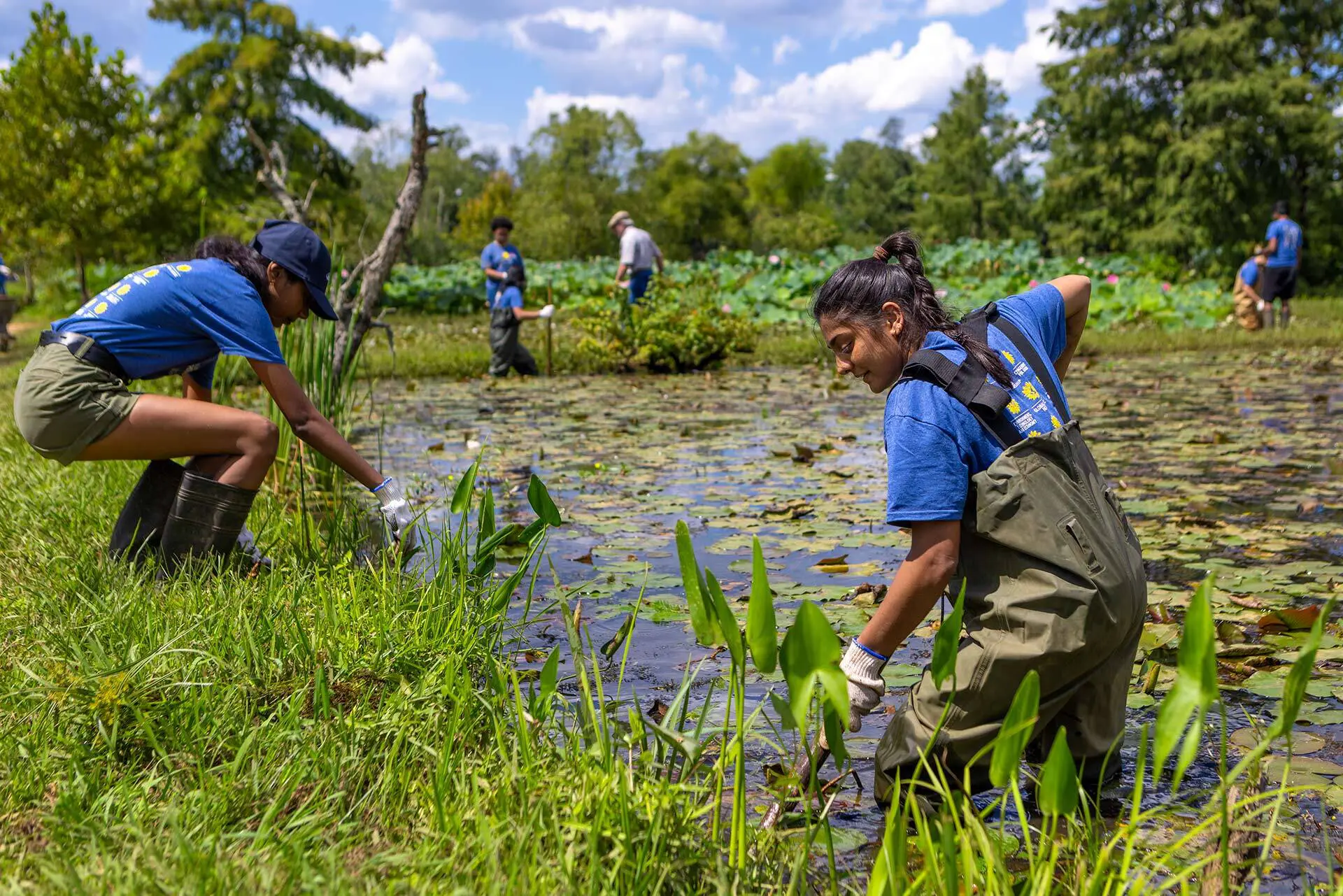
Volunteerism is a well-established path to developing empathy and fostering connections across differences, a basis for healthy society. It follows, then, that community-based learning can encourage people to consider acts that serve their communities as a whole. That’s what Tania D. Mitchell, UMD’s inaugural associate provost for community engagement and professor in the College of Education, has discovered through her research.
The key, Mitchell explained, is that when students conceptualize community learning as engagement versus charity, they’re more likely to acknowledge different perspectives, reflect on social problems and possible solutions, perceive social issues as a shared responsibility and engage in social action.
That’s a difference made by community-engaged learning versus one-off volunteering. One-off volunteering generally references one-time or short-term projects where a person may do work responsive to a need in a community but not spend significant time trying to understand the context or the community in which the work is done. In contrast, in a community-engaged college course, students might work with small business owners to understand challenges to business development and thriving during a period of massive development like a major transit construction project.
While there is great value from one-off volunteering, “Research shows that it doesn't create the kinds of space for learning or reflection that leads to the commitments and actions we see from students who participate in more prolonged experiences,” said Mitchell, “especially those they see as contributing to societal change, social justice or empowering others.”
By forming student cohorts that extended to multiyear learning, Mitchell has facilitated long-term engagement between college students and community members. “Their relationships with each other inspire commitment for a longer term,” she said.
This is particularly critical in the current environment, when higher ed finds itself under attack. “Community engagement isn’t a panacea, but it can be a balm,” Mitchell said of the current national, divisive environment. “At this moment, one of the things we can do is connect with our community to think together about concerns and solutions—and then act on those solutions.”
Carrying it forward
To see all these efforts in action, look no farther than Declan Kirby ’25, who double majored in political science and secondary social studies education. Kirby, now a middle school world studies teacher in Montgomery County Public Schools, said that his time at UMD stoked his passion for civic engagement.
“My experience at Maryland was one of great discussions of controversial issues,” said Kirby. “Before college, I had a rigid view of American politics and right versus left. My education expanded my views, and now I care even more about democracy.”
Kirby’s exposure to a diverse student body and viewpoints played a big role in his decision to become a teacher. “I get to impart history to the next generation,” he said, “and part of my work is to be an advocate for civic engagement.”
And that is the value of higher education on display: Kirby and other students carrying the torch forward that UMD academics lit for them.
“Democracy depends on all of us,” said Scott. “I believe that flagship universities have an obligation to serve their communities and the world. We can’t uphold the law and big ideas unless we get involved.”