
Center for Young Children (CYC)
Academic School-Year Programs
The Center for Young Children includes:
- Full-day preschool program for children ages 3 through 5, September to June.
- Kindergarten, state-certified program September through June
At the Center for Young Children, highly qualified, degreed teachers implement our "study approach" to curriculum to support children's development within seven learning domains: personal and social development, language and literacy, mathematical thinking, scientific thinking, social studies, the arts, and physical development.
The Curriculum
The CYC's curriculum is based on research on how children learn and develop, teacher knowledge of children's individual skills and abilities, family knowledge of children's cultural and linguistic contexts, and what is meaningful for each child. Curriculum emerges as a collaborative process between teacher guidance and children's interests.
Some of the intellectual goals of the curriculum are:
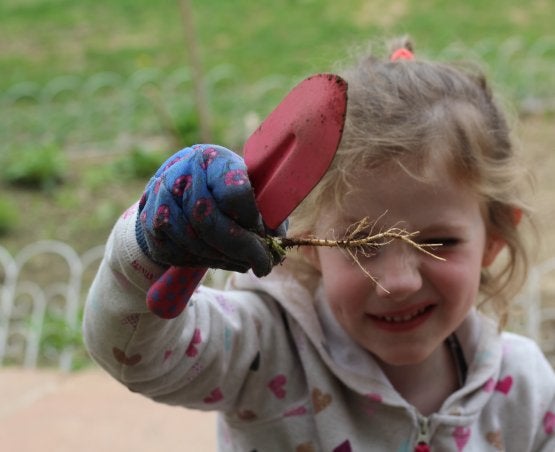
- To encourage children to be actively involved in the learning process.
- To prompt children to think critically and creatively.
- To aid children in asking questions and discovering answers.
- To encourage children to become curious and enthusiastic learners.
- To support children in experiencing success and developing self-confidence.
- To promote, model, and support appropriate social behavior.
Our academic goals align with Maryland's Early Learning and College and Career-Ready Standards for social and emotional learning, approaches to learning, English/language arts, mathematics, social studies, science, physical education and health, and fine arts. Teachers support each learning domain by setting up appropriate materials for exploration, scaffolding knowledge, and choosing study topics that allow first-hand experiences. The Center for Young Children's Study Approach to curriculum is based on the educational philosophy and theory of John Dewey and the Project Approach, as set forth by Lillian Katz and Judy Harris Helm. Our approach includes teaching strategies that enable teachers to guide children through in-depth studies of real-world topics. Each study topic is explored for several weeks, giving children opportunities to ask questions, actively explore hands-on materials, interview experts, reflect on what they learn, and share new knowledge with peers.
However, studies are not the entirety of the curriculum. Children also participate in non-study-related learning centers and activities that encompass the full range of Maryland's Early Learning Standards for preschool and College and Career Ready Standards for kindergarten.
Curriculum Related Links
- Center for Young Children Curriculum Statement PDF
- Project Approach Website
- A Quilting Study
- A Restaurant Study
- A Mixing Study An example of a project implemented during summer camp.
- A Summer Camp Energy Study
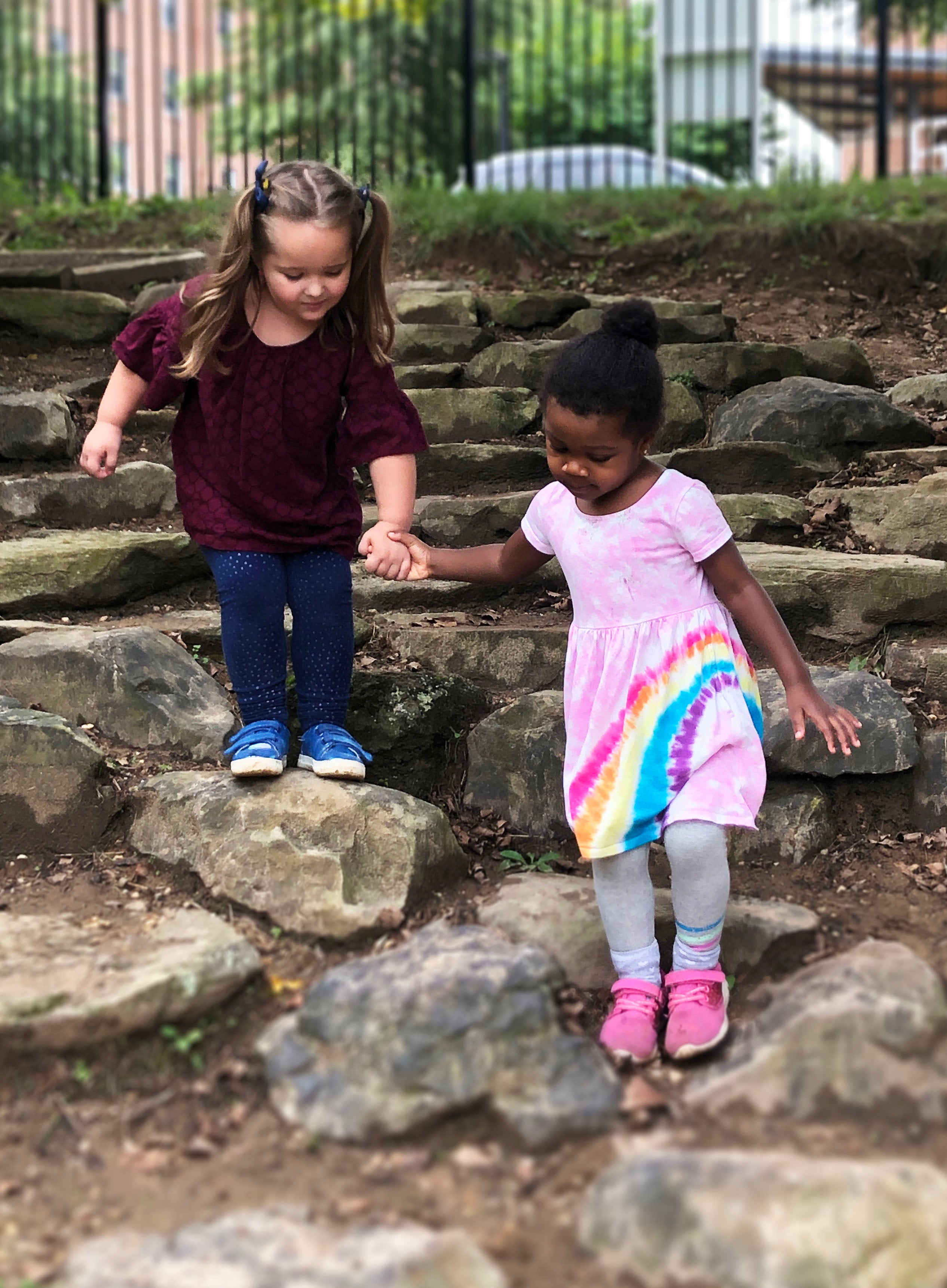
Preschool classrooms at the CYC include children ranging from three to five years of age. Research shows that multi-age groupings benefit both younger and older students in the classroom. According to Dr. Lilian Katz, an international leader in early childhood education, "Mixed-age grouping resembles family and neighborhood groupings, which throughout history have informally provided much of children's socialization and education" (from The Case for Mixed-Age Groupings in Early Education, 1990).
Children's personal and social development is enhanced through the building of relationships within the classroom community. Teachers and children interact through conversation, free-choice of activities, and daily class meetings in which children participate in the progression of the class study. Children are encouraged to explore and discover within their immediate world, and teachers act as recorders of their ideas and experiences. Children are expected to learn to follow classroom rules and routines, and are given the needed assistance in developing positive conflict resolution skills.
When children walk into a classroom at the CYC, they are surrounded by a language-rich environment. Book areas are integral to every classroom, where children are able to spend quiet time looking at books on their own or within a group. Books are integrated into all areas of the curriculum, with non-fiction picture books available at the science table or books about shapes displayed at the math center. Through exposure to different types of children's literature, teachers encourage a deep appreciation of reading. Children see teachers writing down their ideas in the classroom and are thus exposed to language and literature in a meaningful way. Teachers become aware of each child's individual development, and provide appropriate materials and experiences to support each child's growth.
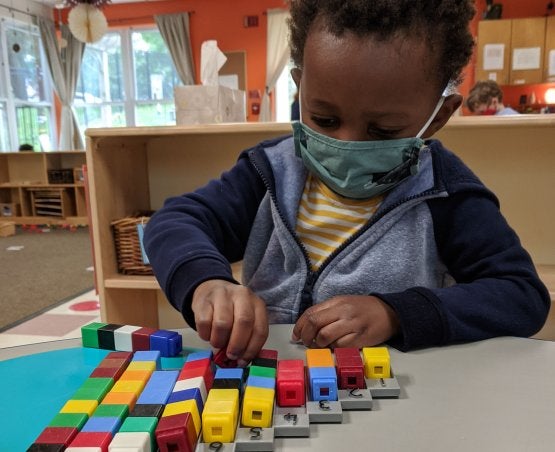
To encourage mathematical thinking, preschool children are given the opportunity to explore and experience. Inviting materials are available for counting, sorting, measuring, patterning, and seriating. Teachers model appropriate ways for using materials and children are given choices of what to use. Children can set up a table with sorting trays and a basket of small, plastic farm animals. They then have the opportunity to look at the materials and choose criteria by which to sort them. Each classroom has an extensive block area in which children can build using Unit Blocks and explore aspects of size, proportion, and position.
Building skills through experience also applies to scientific thinking. Given magnifying glasses, children can explore their class gardens, the class pet, or a leaf collected on the playground. Many study topics provide scientific experiences for observations, such as "gardening" or "insects." Teachers assist the children by asking scaffolding questions and encouraging them to become scientific thinkers who ask questions and research answers.
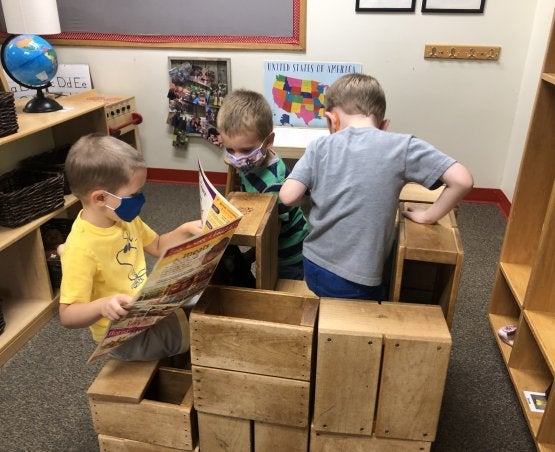
Each CYC classroom features a dramatic play area that allows children to explore the world through imaginative play. From clothes to dress up in and props that encourage play, to large hollow blocks to create structures to interact in, children use the dramatic play area to try to better understand the world around them. Teachers observe play and encourage children to represent their experiences through play. For example, following a field trip to a veterinarian's office, children may wish to create their own version within this area. Teachers help children decide on props and rules to allow for this representation. Opportunities such as these help to build children's social studies learning.
Art experiences include drawing, easel painting, collage and clay. Daily exposure to these materials allows children to continue to build their skills throughout their years at the CYC. Children are given the opportunity to express themselves freely through these media and are encouraged to share their work with others. Throughout the week, classes participate in group music and movement activities, such as fingerplays, singing, or creative movement activities based on familiar stories.
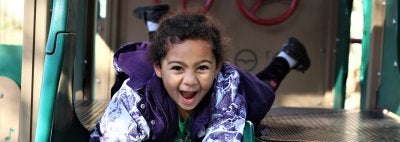
Children develop physical skills through movement and activity. Morning and afternoon playground time is part of the daily schedule to allow for gross motor activity. Our playground offers the opportunity to run, climb, slide, ride tricycles and scooters, and play ball. In the classroom, children develop fine motor skills by working with art and writing tools, puzzles, and computers. Various manipulative materials are available for children to explore while developing their fine motor skills.
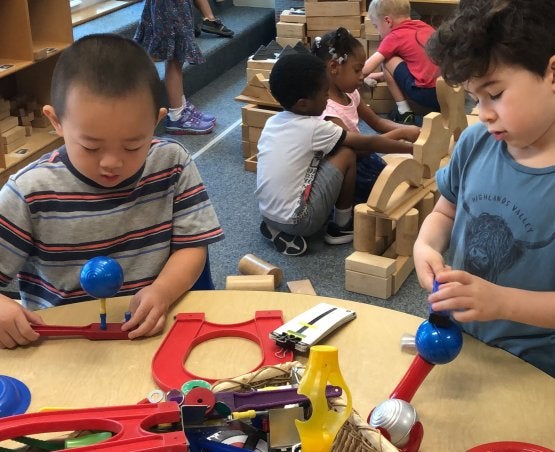
The CYC Kindergarten, as in the preschool classrooms, follows the constructivist approach to learning exemplified by open-ended learning centers based on the knowledge that children learn best by working with materials in a purposeful, playful, hands-on way. Centers include the science table, art table, math table, block area, meeting area, and dramatic play. Materials available in each center allow children to work in multiple ways depending on their development. This provides opportunities for children to strengthen their current understandings as they apply them to their play as well as explore new concepts. For example, children may sort materials at the math table based on color in a preschool classroom and then begin to sort by multiple attributes such as color, shape, and size, in kindergarten.
As children work with materials they construct their own understandings through self-guided exploration, learn from peer interaction, and further their thinking and use of academic language through teacher questioning and modeling. Writing utensils and texts (e.g.. books, menus, magazines, etc.) are integrated throughout the classroom to foster their use in authentic ways.
In addition to child-initiated activities throughout the day, children participate in whole group meetings, small group activities and individualized instruction to further support their literacy, mathematical, and scientific development. In kindergarten children continue to study real-world topics through the Project Approach (Lillian Katz, Sylvia Chard, & Judy Harris Helm), however the projects become more in-depth as they are familiar with these types of investigations, develop more complex thought processes, and can sustain attention to a topic for a longer period of time. Kindergartners are active participants and decision makers through the investigation, voting on topic ideas, helping to determine how to study their chosen topic, and choosing how to culminate their study and share what they have learned with the CYC community. Previous kindergarten studies include The Human Body, Musical Instruments, Airplanes, Boats, and Electricity.
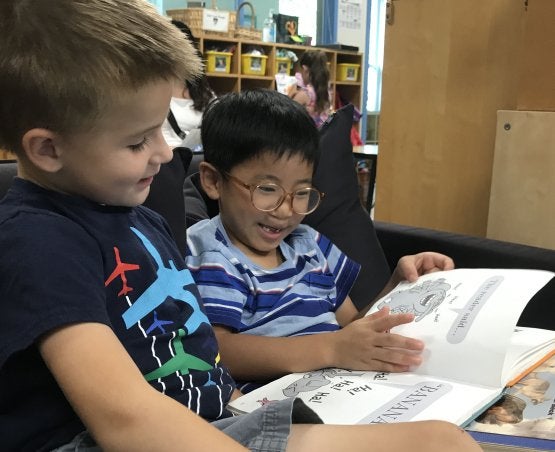
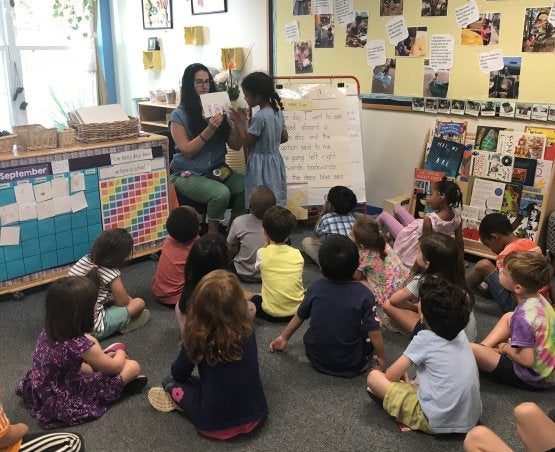
The kindergarten classroom aims to foster confident, motivated, capable readers and writers who understand and value the use of reading and writing. Children are engaged in whole group reading or writing instruction each day during a Reader’s or Writer’s Workshop meeting in which specific concepts are taught and reviewed, as outlined by Lucy Calkins. This meeting is followed by individual and small group participation in reading games or writing activities.
Teachers guide children’s individual writing development through stages beginning with pretend writing and moving toward writing sentences and stories. The combination of invented spellings (sounding out of words) and conventional spellings are supported by encouraging children to sound out unknown words and use resources around the room, such as our Word Wall, to write frequently used words. Games and individual teacher interactions provide authentic meaningful contexts to support children’s growing letter/sound correspondence, concepts of print, memorization of sight words, use of letter blends, and other important skills needed for reading and writing. Additionally, chapter books are read before rest time throughout the year and children are encouraged to critically think about and analyze texts read aloud.
During the spring semester of kindergarten children work with teachers in small groups on Sentence Journals and one-on-one with guided reading in addition to Reader’s and Writer’s Workshop. Small group instruction takes place to support and challenge children as needed. All stages of writing and reading development are respected in our classroom and children are given ample opportunities to share their writing with the class and display their work.
Children explore mathematical concepts on a daily basis through self-initiated choices in the block area, at the math table, and using tools around the classroom. Teachers provide mathematical language to enable children to explain their creations and observations. Teacher-created games and activities often entice children to further work with math related concepts in a more direct way. For example, teacher-made board games may require children to add the value on two dice, and beads may be available for making patterned jewelry.
Children are also engaged in math word problems during whole group and small group instruction with the help of concrete materials to solve these problems. Word problems ask children to solve mathematical equations in story form, often based on real life situations, making the problem more meaningful to the children. Once children understand how to solve a word problem, the number sentence is introduced. Throughout the year children are engaged in higher-order thinking while working with materials through teacher questioning that guides them to think in new ways. Children also participate in collecting data through surveys, representing the data in different ways, and analyzing and interpreting the data. During the second semester children meet in small groups to formally explore concepts such as money, weight, estimation, and 3-dimensional shapes in game-like situations.
Scientific thinking is encouraged throughout the classroom by the abundance of living things and interesting materials. The kindergarten classroom currently has a guinea pig that children interact with on a regular basis. Children are encouraged to observe the world around them, both in and out of the classroom, form questions, and investigate answers to their questions by creating experiments. Each year children have the opportunity to work with large balls and ramps outside of the classroom exploring concepts such as weight, size, force, speed, and balance. Other materials are brought into the classroom reflecting children’s interests.
Fostering children’s social and emotional development continues to be an emphasis in the kindergarten classroom. We guide children towards independence, modeling problem solving skills and encouraging them to “use their words” to solve problems with their peers before coming to a teacher for help. Children are given responsibilities and are empowered to be positive leaders within the classroom and to the younger children on the playground. Responsibilities such as choosing a place to sit during group meetings supports children’s growing ability to self-regulate their behavior.
The CYC kindergarten supports Vygotsky’s philosophy that teachers are facilitators of learning and children should be taught to initiate and direct their own learning. Children are taught to be cooperative members of a classroom community, to be inquisitive about the world around them, to research answers to their questions, and the important roles of reading, writing, and mathematics in their lives, all of which set them on the path to being lifelong learners.