

Intergroup Dialogue Training Hub (InDi Training Hub)
Resources
This page will be periodically updated with new information. For the quickest updates about resources we may have to offer and recommend, please email igdtraining@umd.edu to be added to our Center's listserv.
On Deeper Reflection -
Nonviolent Communication
“Hey folks, Scott Weingart here, and this is the On Deeper Reflection Podcast. Today, on the show, I'm going to discuss one of the most important books I have ever read. It's called Nonviolent Communication, A Language of Life.”
Chasing Life -
How to Have Difficult Conversations in a Polarized World
In a world marked by war and political polarization, it can certainly feel at times like we have all lost touch with the art of compromise – the wisdom to recognize that real progress demands sacrifice. Except, that’s not entirely true. Dr. Sanjay Gupta sits down with social psychologist Peter T. Coleman, author of “The Way Out: How to Overcome Toxic Polarization,” to discuss the fundamentals of navigating difficult conversations, how our brains evolved to handle conflict, and why reaching a compromise is not always the best solution.
Engage Effectively across the Divide
This is a 30-minute conversation where the hosts identify some really practical strategies for talking with others. Much of this conversation resonates with the work of the Intergroup Dialogue Training Center.
How to Have Constructive Conversations with People you Disagree With
This is a longer conversation. It specifically mentions talking to family members during the holidays, and the host reflects (without specificity) on applying what she learned from this conversation to talking with her parents. There is much to be learned with regard to having a conversation.
10% Happier with Dan Harris -
An Uncomfortable (But Meaningful) Conversation About Race
Many of us come to meditation for comfort. But, especially for white people, right now is a time to embrace our discomfort. Lama Rod Owens encourages me to step way out of my comfort zone in this conversation, and I am grateful to him for it. Owens is the author of the soon-to-be-released book, Love and Rage. As it says in the bio on his website, his story sits at the "cross sections" of so many aspects of American life "as a Black, queer male, born and raised in the South." He was officially recognized by the Kagyu school of Tibetan Buddhism after he completed a three-year silent retreat, during which time he says he dealt with years of past pain and trauma. As you will hear him say in this interview, he "worked his butt off to feel ok." After retreat, he completed a Master of Divinity at Harvard.
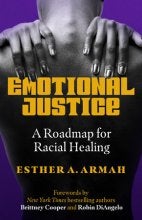
Emotional Justice: A Roadmap for Racial Healing by Esther A. Armah
In this groundbreaking book, Esther Armah argues that the crucial missing piece to racial healing and sustainable equity is emotional justice—a new racial healing language to help us do our emotional work. This work is part of the emotional reckoning we must navigate if racial healing is to be more than a dream. We all—white, Black, Brown—have our emotional work that we need to do. But that work is not the same for all of us.
This emotional work means unlearning the language of whiteness, a narrative that centers white people, particularly white men, no matter the deadly cost and consequence to all women and to global Black and Brown people. That’s why a new racial healing language is crucial.
Emotional Justice grapples with how a legacy of untreated trauma from oppressive systems has created and sustained dual deadly fictions: white superiority and Black inferiority that shape—and wound—all of us. These systems must be dismantled to build a future that serves justice to everyone, not just some of us. We are the dismantlers we have been waiting for, and emotional justice is the game changer for a just future that benefits all of us.
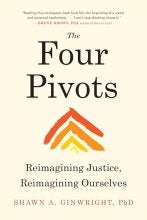
The Four Pivots: Reimagining Justice, Reimagining Ourselves by Shawn Ginwright
We need a fundamental shift in our values--a pivot in how we think, act, work, and connect. Despite what we’ve been told, the most critical mainspring of social change isn’t coalition building or problem analysis. It’s healing: deep, whole, and systemic, inside and out.
Here, Shawn Ginwright, PhD, breaks down the common myths of social movements--a set of deeply ingrained beliefs that actually hold us back from healing and achieving sustainable systemic change. He shows us why these frames don’t work, proposing instead four revolutionary pivots for better activism and collective leadership:
Awareness: from lens to mirror
Connection: from transactional to transformative relationships
Vision: from problem-fixing to possibility-creating
Presence: from hustle to flow
Supplemented with reflections, prompts, cutting-edge research, and the author’s own insights and lived experience as an African American social scientist, professor, and movement builder, The Four Pivots helps us uncover our obstruction points. It shows us how to discover new lenses and boldly assert our need for connection, transformation, trust, wholeness, and healing. It gives us permission to create a better future--to acknowledge that a broken system has been predefining our dreams and limiting what we allow ourselves to imagine, but that it doesn’t have to be that way at all. Are you ready to pivot?
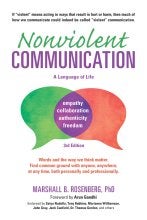
Nonviolent Communication: A Language of Life by Marshall Rosenberg
Do you hunger for skills to improve the quality of your relationships, to deepen your sense of personal empowerment or to simply communicate more effectively? Unfortunately, for centuries our culture has taught us to think and speak in ways that can actually perpetuate conflict, internal pain and even violence. Nonviolent Communication partners practical skills with a powerful consciousness and vocabulary to help you get what you want peacefully.
In this internationally acclaimed text, Marshall Rosenberg offers insightful stories, anecdotes, practical exercises and role-plays that will dramatically change your approach to communication for the better. Discover how the language you use can strengthen your relationships, build trust, prevent conflicts and heal pain. Revolutionary, yet simple, Nonviolent Communication offers you the most effective tools to reduce violence and create peace in your life—one interaction at a time.
YouTube Video: Stillpoint -
Clean Pain Dirty Pain, Resmaa Menakem's 5 Steps
Healing happens in our body and is more likely in a body that can stay settled in the midst of conflict and uncertainty.