Meet the Team
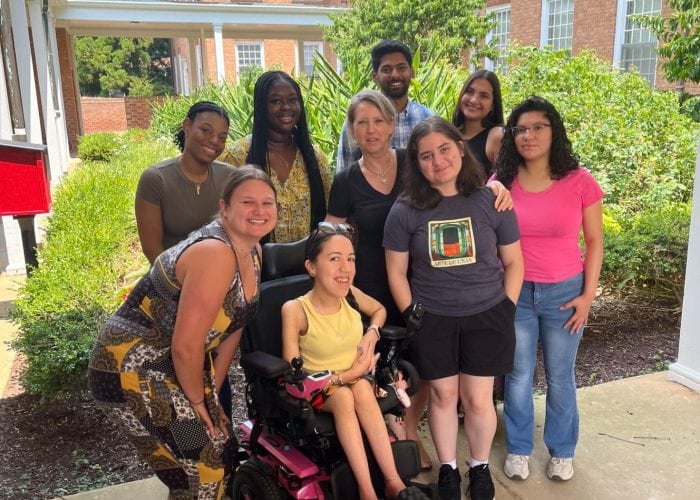
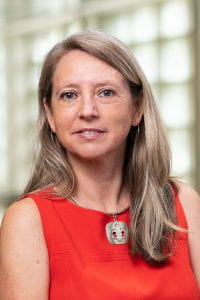
Ana Taboada Barber
Director of the Reading, Engagement, and Diversity (READ) Lab
Ana Taboada Barber is a Professor in the College of Education. Her research explores how cognitive processes (like executive function and question generation) and motivational factors (such as autonomy support and self-efficacy) shape literacy and language development in elementary and middle school students across diverse classroom and individual contexts.
Drawing on her experience as an English as a Second Language teacher in immersion settings, Ana’s work centers on Multilingual Learners and Emergent Bilinguals in the United States. She has recently expanded her research to Spanish‑speaking students in Chile and Argentina, as well as learners in Francophone countries. Over the past decade, she has increasingly focused on how executive function skills—including working memory, inhibition, cognitive flexibility, and broader executive control—contribute to multilingual learners’ reading development as part of a larger system of self‑regulation.
SONIA URBANO AGUILAR
READ Lab Coordinator
Sonia Urbano Aguilar attended UMBC and earned her B.S. in Psychology in 2025. Back in Argentina, she studied Psychopedagogy and gained extensive experience working with children, both as a psychopedagogy apprentice and as a ballet teacher. She joined the READ lab in June of 2024.
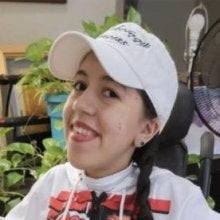
MARIEH ARNETT
Data Manager
Marieh Arnett has an M.S. in Quantitative Methodology from the University of Maryland, College Park. She holds an M.P.S in Clinical Psychological Science, a B.S in Psychology with a minor in Spanish, and a B.S in Statistics, all from the University of Maryland, College Park. She has experience with data analysis relating to multiple fields of study, and her specific interests deal with causal inference and exploring the relationships and connections between variables. She is super excited to work on a project that has such a significant impact on today’s youth.

YUANKE PAN
Graduate Research Assistant
Yuanke Pan is a doctoral student in Special Education. She earned a master’s degree in TESOL from the University of Hong Kong. After three years of teaching in a Chinese public primary school, Yuanke developed a strong interest in bilingual children’s reading comprehension. The students in her class inspired her to commit to supporting struggling readers, which led her to join the READ Lab and pursue her academic passion.
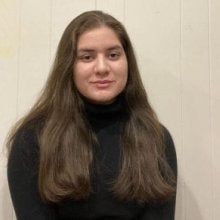
ALEXANDRA LOPEZ RODRIGUEZ
Research Assistant
Alexandra Lopez Rodriguez is a research assistant with a Bachelor’s in Psychology from the University of Maryland. She served as a bilingual assessor for the first time in the fall of 2022 and has since assisted with behind-the-scenes tasks, including data organization. As an aspiring mental health professional, she cherishes the well-being and accomplishments of others (especially today’s youth and children). She enjoys baking, hanging out with her sister, and listening to rock music. She is very grateful for all she has learned thus far and is excited to foster bilingualism with everyone.
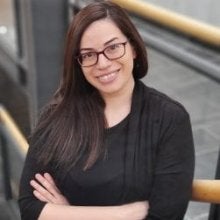
ANGELIKI ALTANI
Post-Doctoral Consultant
Angeliki Altani holds a PhD in Educational Psychology and has a complementary background in Cognitive Science and Linguistics. Her research centers on the cognitive processes underlying reading development across languages, aiming to understand the mechanisms involved in reading fluency and their relation to reading comprehension. She is also interested in the role of executive functions in the development of skilled reading. Angeliki has extensive experience in conducting school-based research, using eye-tracking and experimental behavioral design.