The Maryland Initiative for Literacy & Equity (MILE)

Dual Language with MILE

MILE supports school districts in designing and implementing Dual Language Bilingual Education (DLBE) and builds capacity among DLBE leaders and staff to create and support sustainable program models, in order to serve the needs of all language learners.

This page was developed with information compiled by Sandra Gutiérrez.
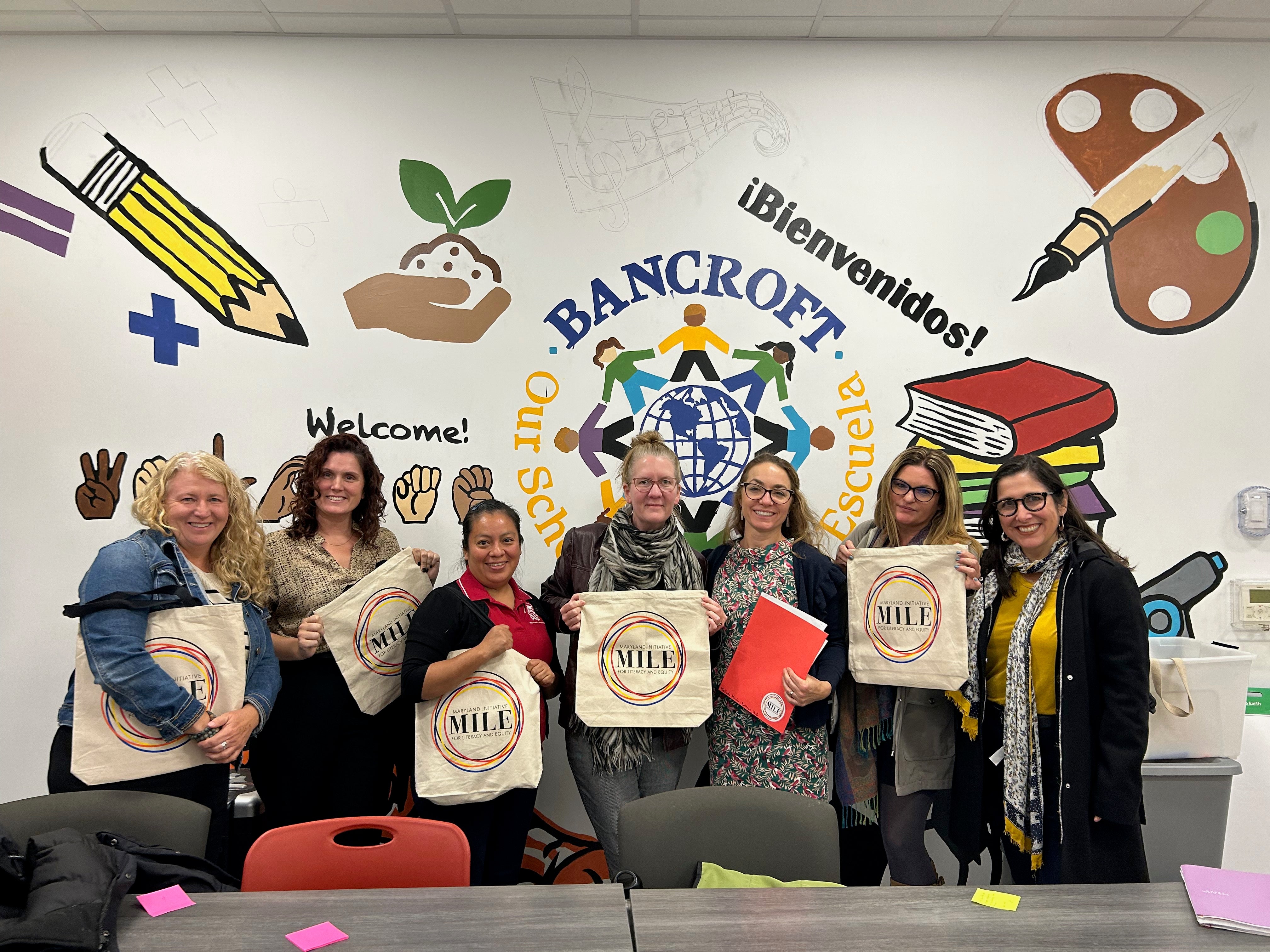
Teachers stand together with MILE totes

About Dual Language

Dual Language education refers to long-term additive bilingual education models that use two languages (English and a partner language) for content instruction and communication.

The model has three interconnected goals: bilingualism and biliteracy, academic achievement, and socio-cultural competence.

A fourth emerging goal is critical consciousness, which involves recognizing inequities and engaging in action for change.

DLBE includes multiple program types:

Two-way programs: English speakers and partner-language speakers learn together in both languages (TWI/DLI).

One-way programs: Include developmental bilingual, foreign language immersion, and heritage language programs.

These programs reflect the historical roots of bilingual education as a tool for equity and access.

In a whole-school model, all students participate in bilingual instruction with full alignment across staffing and curriculum.

In a strand model, only a subset of students participates in the dual language program within a larger English-medium school.

DLBE programs show benefits across multiple domains:

Cognitive: executive function, metalinguistic awareness, and cognitive flexibility.

Academic: higher achievement, reduced gaps, and stronger long-term trajectories.

Bilingualism: strong skills in both languages and sustained home language development.

Sociocultural: stronger identity, cross-cultural understanding, and motivation.

Long-term: higher college attendance, income, and social-emotional outcomes.