The Maryland Initiative for Literacy & Equity (MILE)
Dual Language Educator Conference
The Dual Language Educator Conference, a key annual event hosted by MILE, brings together educators and leaders in Dual Language Bilingual Education (DLBE) to promote awareness, foster partnerships, and exchange knowledge and resources aimed at advancing DLBE excellence and equity.
Click to interact with our photo gallery!

DLEC 2027 information is coming soon!
May 16, 2026 • 8:00 AM to 3:00 PM • HJ Patterson Hall, University of Maryland Campus
Theme: Rooted in Community, Empowering Bilingual Education
Keynote Speaker: Dr. Jasmine Brann
“Bilingual Brilliance - ¡Brilla Tu Luz!“
Dr. Jasmine Brann is a school leader and national advocate for multilingual education with over two decades of experience cultivating inclusive, high-achieving communities where students' identities, languages, and brilliance are affirmed and celebrated. As the 2024 DCPS Principal of the Year, Dr. Brann is recognized for her leadership in language learning, equity, and community engagement. She led the transformation to a whole-school Bilingual-Arts model in 2023 and the renaming of John Tyler Elementary to Shirley Chisholm Elementary in 2024– centering love, leadership, and legacy. She champions a holistic approach to multilingual education that expands opportunity for historically underrepresented students. Dr. Brann is an author, speaker, and founder of the nonprofit Do Write Today, which promotes literacy and scholarships for DC high school graduates. She holds degrees from Howard University, the University of Maryland, and Bowie State University.
Schedule
| 8:00 - 8:30 | Breakfast |
| 8:30 - 8:45 | Welcome and Opening Remarks |
| 8:55 - 9:40 | Session 1 - Concurrent Sessions |
| 9:50 - 10:35 | Session 2 - Concurrent Sessions |
| 10:45 - 11:30 | Session 3 - Concurrent Sessions |
| 11:40 - 12:40 | Lunch |
| 12:40 -1:35 | Keynote Speaker: Dr. Jasmine Brann |
| 1:45 - 2:45 | Collaborative Conversations |
| 2:45 - 3:00 | Raffle |
| 3:00 - 4:00 | Social Hour (TBA) |
Session 1 • 8:55 - 9:40 AM
- Where Standards Meet Stories: Growing Early Biliteracy Across Languages Together / Donde los estándares se encuentran con las historias: fortaleciendo la biliteracidad temprana juntos, a través de los idiomas
Gricell Medley, MCPS
Room 2114
Spanish session - Expanding confidence through Sociocultural Competence: crossing borders with humility, communication, and cooperation
Guillermo Brown, Archbishop Borders School - Archdiocese of Baltimore
Room 2118
Bilingual session (Spanish/English) - Panel: The Power of Family–School Partnerships: Desarrollando la lectoescritura bilingüe
Dr. Melinda Martin-Beltran, Liza Sanchez, Bianca Garrett and Participating Families, PGCPS
Room 2123
Bilingual session (Spanish/English) - STEM en español: matemáticas que unen escuelas y familias
Gloriana Vargas, DCPS
Room 2124
Spanish session - Where Words Sparkle: Bridging English and Spanish With Classroom Enchantment
Sara Shoemaker & Marcy Sprouse, HCPS
Room 2217
Bilingual session (Spanish/English) - Talk TBA
Speaker TBA
Room 2242
Spanish session
Session 2 • 9:50 - 10:35 AM
- ¿Qué sucede antes de la oración? La oralidad como puente hacia el desarrollo de la escritura a lo largo de los grados
Karina Rondón Farge & Liz Diaz, DCPS
Room 2114
Spanish session - Building Comprehension: Narrative Diagram Strategies for Dual Language Classrooms
Paola Ibarra, MCPS
Room 2118
Bilingual session (Spanish/English) - Bridging con Propósito: Intentional Connections for Biliteracy
Patricia Donati, DPCS
Room 2123
Spanish session - Care beyond the classroom: Supporting immigrant/refugee students through counselor professional development
Taylor Togafau-Lewis, Jessica Diaz, Rocio Hernandez, Jaqueline Marquez & Teena Waller, University of Maryland
Room 2124
English session - ¡Somos Científicos! Integrando contenido y lenguaje riguroso durante la clase de Ciencias.
Karen Serrano, Lorena Rosario & Alina Thouyaret, DCPS
Room 2217
Spanish session - Language Difference or Disability? Supporting Dual Language Learners and Preventing Misidentification in Special Education
Chesse Doré, DCPS
Room 2242
Bilingual session (Spanish/English)
Session 3 • 10:45 - 11:30 AM
- Panel: Launching a Program and Sustaining Spanish Across the Community
Tania Saguid and Participating Families, CCPS
Room 2114
Bilingual session (Spanish/English) - Collaboration with Related Service Providers to provide Tier-1 Language-Based Supports in DLI Classrooms
Yesenia Cuellar & Holly Fredrickson, BCPS
Room 2118
Bilingual session (Spanish/English) - Connected Classrooms: SEL Activities that Strengthen Content Mastery and Language Acquisition
Patricio Poblete Cortez, DCPS
Room 2123
Bilingual session (Spanish/English) - From Scores to Success: Using Language Proficiency Data to Enhance Student Performance
Dr. Sugely Solano, Brandywine School District
Room 2124
English session - Estrategias para la comprensión lectora
Dr. Margarita Rosales, MCPS
Room 2217
Spanish session - Cultivating Community Through Bilingual Teacher Mentorship Berenice Pernalete, Instituto Mundo Verde
Room 2242
English session
Session 4 • 1:45 to 2:45 PM • Collaborative Conversation Sessions
- Information TBA. Facilitators and topics will be finalized the week before the conference.
*All afternoon sessions located in the Grand Ballroom in the STAMP Building at the University of Maryland.
May 31, 2025 • 8:00 AM to 3:00 PM • HJ Patterson Hall, University of Maryland Campus
Theme: Theme: Together We Grow: Connecting and Collaborating in Dual Language Bilingual Education
Keynote Speaker: Dr. Katherine Barko-Alva
“Dual Language Education for all: Creating sustainable language and content learning opportunities through connection, access, and hope”
Dr. Katherine Barko-Alva is an Associate Professor and Director of the ESL/Bilingual Education program at William & Mary’s School of Education. A bilingual scholar and former McKnight Doctoral Fellow, her research focuses on equitable practices in culturally and linguistically diverse (CLD) K–12 classrooms and teacher preparation in Dual Language and ESL education. With over 14 years of experience, her work is shaped by her own journey as an English learner. She is the recipient of numerous awards, including the Jefferson Teaching Award and the Virginia Latinx Leadership Award in Education. Her latest book, published by Teachers College Press, explores how schools can build trust with CLD families through more inclusive partnerships.
Session 1
- Estrategias de enseñanza digitales con propósito: toma de decisiones para el desarrollo y el aprendizaje en estudiantes bilingües
Maria del Carmen Teijeiro, Español - Matemáticas STEM en español que Unen Escuelas y Familias
Gloriana Raquel Vargas Artavia, Español - 3 Research-Based Strategies to integrate Language & Content
Paola Ibarra, Bilingual (Español) - Building Syllabic Fluency for Spanish Language Learners
Sara Shoemaker, English - Equidad e inclusión para nuestros aprendices del español
Beth Carmichael, Bilingual (Español) - Dual Language Learner Family & Community Engagement: Applying National Findings in DLBE
Sandra Barrueco, Bilingual (Español) - Navigating Tensions between Separation of Languages and Translanguaging
Elizabeth Howard, English
Session 2
- Immersion with Intention: Building Bilingual Foundations Through Play and Purpose
Marcela Montoya Hoyos, Belen Quellet, Julieta Juaregui, Bilingual (Español) - Panel: Capacitando en español para docentes de español: claves y desafíos
Katia Santana & Lorena Rosario, Maria Gomez & Beth Carmichael, Español - Language Night is for Everyone!
Susan Levy, Tessa Arevalo, Bilingual (Español) - Best Practices focused on developing literacy skills
Marcela Latorre, Gricell Medley, Bilingual (Español) - Collaborating with students through Social Emotional Learning - the Dual Language Bilingual Education Connection
Guillermo Brown, Bilingual (Español) - Historias de familia: De la oralidad a la escritura
Jasmin Guerrero, Bilingual (Español) - One Table, Many Dishes: Food as a Cultural Path to Equity
Philimena Owona, French
Session 3
- Bridging in a 3rd grade math classroom
Jose Patiño, Bilingual (Español) - SIM, pasos para enseñar a decodificar en español
Patricia Donati, Español - Estrategias de enseñanza cooperativista en un salon bilingüe
Nancy Cintron Anaya, Carmen Fernandez, Joyce Wilderrama, Bilingual (Español) - Panel: Leveraging Resources and Partnerships to Grow a Dual Language Program
Erin Lowry, Ashley Pickering, Patty Silver, Katie Vaselkiv, Lauren Watson, English - Small Group Planning in Spanish: Comprehension
Noelia Gomez Alvarez & Cristian Palacios Cordoba, Bilingual (Español) - Facilitating Comprehensible Input with Icons and Gestures
Jennifer Tony, English - Learning Solutions for Bilingual Educators: Unveiling Grant-Funded Opportunities
Jennifer Kouakeu, English
Collaborative Conversation Topics
- How do we welcome, serve and support African American students/families in our various types of bilingual education programs? ¿Cómo recibimos, servimos y apoyamos a los estudiantes y familias afroamericanas en nuestros diversos programas de educación bilingüe?
- How can we ensure equitable and high-quality instruction in BOTH languages? (not prioritizing one language over the other) / ¿Cómo podemos garantizar una instrucción equitativa y de alta calidad en AMBOS idiomas? (sin priorizar un idioma sobre el otro)?
- What can we do to improve bilingual teacher recruitment and new bilingual teachers’ professional development? / ¿Qué podemos hacer para mejorar la contratación y el desarrollo profesional de docentes bilingües que son nuevos?
- How do we best support students with special needs in our bilingual programs? / ¿Cómo podemos apoyar de la mejor manera a los estudiantes con necesidades especiales en nuestros programas bilingües?
- What are powerful instructional practices to teach writing to bi/multilingual students in bilingual programs? What has worked for you? What else do we want to try? / ¿Qué prácticas pedagógicas son eficaces para enseñar escritura a estudiantes bilingües y multilingües en programas bilingües? ¿Qué les ha funcionado? ¿Qué más queremos probar?
- What are characteristics of relevant and high quality curriculum for bilingual schools? How do we find, adapt or create curriculum with these characteristics? / ¿Cuáles son las características de un currículo relevante y de alta calidad para las escuelas bilingües? ¿Cómo encontramos, adaptamos o creamos un currículo con estas características?
- What does culturally and linguistically responsive literacy instruction look like, considering both Biliteracy research and pedagogies and the Science of Reading? / ¿Cómo se ve la enseñanza de la lectoescritura cultural y lingüísticamente relevante, considerando tanto las investigaciones sobre la lectoescritura bilingüe (biliteracy) y la Ciencia de la Lectura (Science of Reading)?
- How do we welcome, serve and support students who come late (“newcomers”) -both “English speakers” and speakers of the partner language- into our bilingual programs? / ¿Cómo recibimos, servimos y apoyamos a los estudiantes que llegan tarde (“newcomers”) - los angloparlantes y los que hablan la lengua que se enseña en el programa - a nuestros programas bilingües?
- How do we develop equity, culturally responsive and anti-racist lenses and practices in our bilingual education programs? / ¿Cómo desarrollamos ideologías y prácticas equitativas, culturalmente sensible y antirracistas en nuestros programas de educación bilingüe?
- How can we use data to inform instruction in ways that honors our students’ bilingualism/biliteracy and cultures? / ¿Cómo podemos usar los datos para influenciar la enseñanza de maneras que respeten el bilingüismo/biliteracidad y las culturas de nuestros estudiantes?
May 31, 2024 • 8:00 AM to 3:00 PM • HJ Patterson Hall, University of Maryland Campus
Theme: Cultivating Bilingualism, Biliteracy, Academic Excellence, & Critical Multicultural Understanding in Our Schools
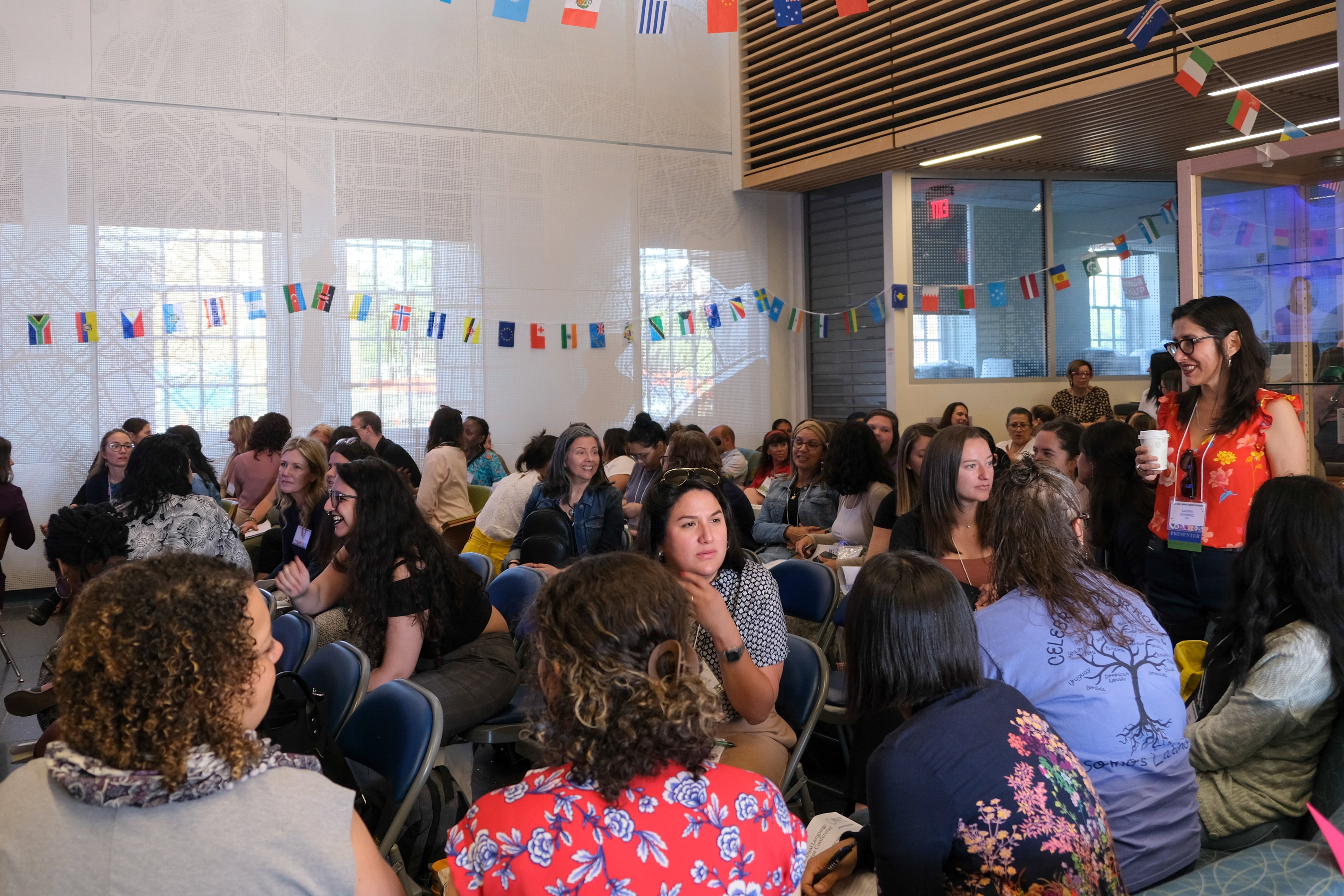
On June 1st, 2024, MILE welcomed nearly 100 educators and leaders in Dual Language Bilingual Education (DLBE) to raise awareness, strengthen partnerships, and share understanding and resources for DLBE excellence and equity.
At the inaugural conference, attendees heard from our keynote speaker, Mayra Canizales Cruz, attended bilingual sessions led by experienced DLBE educators, and participated in collaborative conversations centered around this year's theme, “Cultivating Bilingualism, Biliteracy, Academic Excellence, & Critical Multicultural Understanding in Our Schools.”
Keynote Speaker: Mayra Canizales Cruz
“Linguistic liberations es un derecho”
Mayra Canizales Cruz is a lifelong Dual Language educator and Emergent Bilingual expert and national award-winning instructional leader. She is the founding partner of The Canizales Group and has developed the LEAD-Eres Framework used to prepare Latino/x school leaders for the dual language principalship. Mayra believes that all emergent bilinguals deserve linguistically liberating school models and helps school districts and networks prepare Latino/x leaders for the Dual Language principalship.
Session 1
- Assessing Bilingual Reading: Understanding (Valid) Uses of CBM-R Assessments in Dual Language Programs
Dr. Alejandro Pérez Belda, Bilingual - Empowering Novice Bilingual Educators: Strategies for DLBE Classrooms
Cody Norton, English - TALLER: Juego y diálogo en la enseñanza de matemáticas
Jaime Solano Cardoso y Angeles Itzel Reza, Español - Translanguage-ando una unidad de 1er grado
Flor Rivas and Mariana Sanchez, Bilingual - Panel: Starting New Programs
Larissa Avellaneda, Autumn Hoffman, Julia Walsh, and Jane Tarwacki, English - Growing Our Knowledge of Literacies: Varied Languages, Writing Systems, & Strategies to Ease Reading in English for DLLs
Dr. Anita Pandey, English
Session 2
- Not Just in June: LGBTQIA+ Representation in the Dual Language Classroom
Serena Keeney-Horsch and Deirdre Beet, Bilingual - Metalanguage: A Road-Map to Develop Crosslinguistic Lessons That Advance Biliteracy
Vanessa Chacón Ph.D. and Patricia Seidler, Bilingual - TALLER: Juego y diálogo en la enseñanza de matemáticas
Jaime Solano Cardoso y Angeles Itzel Reza, Español - Bilingüe is Best: Lessons Learned While Developing a Bilingual Foundational Literacy Curriculum
Jaclyn Pilette and Beth Carmichael, Bilingual - Estrategias para fomentar el desarrollo del habla y participación del educando
Euclides Rengifo Cordoba, Español - IMV Fellowship: Federal Funding for Bilingual Educators Enhancing Student Academic Language Development
Jennifer Kouakeu and Berenice Pernalete, English
Session 3
- Las novelas gráficas, más allá del dibujo
Jenny Delgado, Español - Transformational Coaching in Bilingual Schools: Elementos centrales y herramientas / Key elements and tools
Sandra Gutiérrez, Bilingual - Estrategias de dominios de aula usando técnicas de conciencia fonológica / Classroom Management Strategies Using Phonological Awareness Techniques
Carolina Saenz-Acosta, Bilingual - Cultivating Critical Consciousness for Teachers of Dual Language Learners
Génesis Aguilar Chavez, English - El Puente: Promoción de la conciencia bilingüe en estudiantes de escuela elemental
Monserrat Gil, Catalina Torres, y Jasmin Guerrero, Español - Student-Led Collaborative Learning
Denia Nassar, English
Session 4
- Language Development for ALL! Sensory, Interactive and Graphic supports in Dual Language Classrooms
Susan Levy and Tessa Arevalo, English - High-Quality Bi-literacy Strategies for Early-Ed Learners
Yesenia Padilla and Liza Sanchez, Bilingual - Centros de alfabetización bilingüe: La importancia del desarrollo de las 4 habilidades lingüísticas a través de centros independientes / Bilingual Literacy Centers: The Importance of Developing the Four Language Skills Through Independent Centers
Noelia Gomez Alvarez, Bilingual - Introducción del Uso de de Project by Learning como herramienta de trabajo en nuestro salón de clases bilingüe
Nancy Cintrón y Joyce Walderrama, Español - School Leader Panel
Jessica Morales, Rosa Berrocal, and Elizabeth Pefaure, Bilingual - Translinguistic Connections: A Closer Look at Phonology and Phonetics
Dr. Antonio Fierro, Bilingual
Collaborative Conversation Topics
- How do we support students with special education needs in DL programs?
- How do we effectively assess and design/implement intervention in DL programs?
- How do we find and secure authentic and engaging resources for DL programs, particularly in the partner language?
- How do we ensure we are meeting the third goal (socio-cultural competence) in our DL programs, considering the diversity among our teachers?
- How do we teach for biliteracy? particularly focusing on the balance between language and connection across languages?
- How to support bilingual DL teacher professional learning in a context that is focused on English-only PD (both a critical issue and problem of practice)?
- How do we work together to retain, sustain and support work-life balance for bilingual teachers?
- How can school leaders (DL coordinators, admin, instructional leads, coaches) work with district leaders to advocate for and support DL programs?
- How to ensure families buy-in and engage them in planning, developing and sustaining DLBE programs? Particularly how do we engage minoritized/marginalized families?
- How do we incorporate the language/literacy practices, histories, and funds of knowledge of minoritized students (African-Americans, speakers of indigenous languages, non-standard varieties, etc)?
Conference Goals
- Raise the visibility of DLBE in the DMV & elevate voices of communities working toward equity for multilingual learners
- Build a community (network) of educators & leaders committed to DLBE goals
- Collaborate with educator-leaders in the DMV who are developing new programs & sustaining established DLBE programs
- Share promising practices, strategies & experiences with fellow educators to promote equity & quality in DLBE
Values
- Centering our DLBE students & communities
- Building on our students’ & communities’ assets
- Aligning with the goals of DLBE (bilingualism & biliteracy, academic achievement in both languages, sociocultural competence, critical consciousness)
- Engaging in shared learning through active listening & collaboration
Session Expectations
- 45 minutes
- Intended for educators & leaders working in DLBE schools
- Interactive & participatory
- Languages other than English are welcome
Conference Strands
- Leadership
- Sociocultural Competence
- Literacy/Biliteracy
- Program Development
- Content & Language Integration
- Family & Community Engagement
- Bilingual Education Assessment